Dr Des Corrigan looks at the up-to-date science on CBD as a supplement
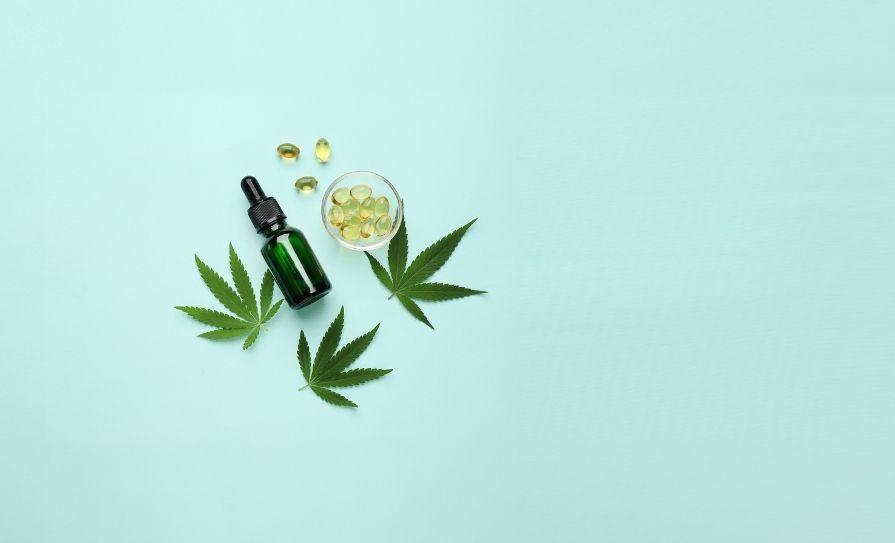
The European Food Safety Authority (EFSA) published an update on the safety of cannabidiol (CBD) as a novel food at the end of January. If you stock CBD products, what do you need to know about that update?
For a start, I should explain why it is an EFSA statement rather than one from the European Medicines Agency (EMA). This dates back to 2020 and a judgement by the European Court of Justice that resulted in the EU Commission stating that CBD should be classified as a novel food requiring authorisation from EFSA before being placed on the market.
This decision is despite the fact that the EMA had previously authorised CBD as a medicinal product for use as an adjunct to clobazam in cases of treatment-resistant epilepsy (Lennox- Gastaut syndrome and Dravet’s syndrome), and in seizures associated with tuberous sclerosis complex.
How CBD can then be designated as a novel food is beyond me, given that food supplement status had been denied to melatonin by the Food Safety Authority of Ireland (FSAI) as described in my January article, on the basis that it had already been authorised as a medicine by the Health Products Regulatory Authority (HPRA), but it is not the first time that the law has shown its asinine nature.
As a result of that Commission decision, the EFSA has received some 200 applications for authorisation of CBD supplements. In 2022, the official EFSA Journal published a statement on the safety of CBD as a novel food. The multi-national panel of experts stated that because of the considerable uncertainties and data gaps surrounding the adverse effects of CBD, its safety as a novel food could not be established at that time. The NDA Panel, as it is known, followed this up in June of last year by making the same point about synthetic CBD (as opposed to the natural molecule extracted from hemp varieties of the cannabis plant).
That negative attitude did not deter UK food safety authorities, possibly in a bout of post-Brexit one-upmanship, from setting an acceptable daily intake (ADI) of CBD of 10mg for an average 70kg adult.
Australia and Canada have allowed even higher ADIs. Australia has, since 2020, allowed intake of 150mg per day, but the product must be supplied over- the-counter by a pharmacist. Canada’s Science Advisory Committee on health products containing cannabis concluded that CBD was safe for use up to a maximum of 30 days for doses between 20 and 200mg per day for healthy adults, provided they discussed the use of all other medicines and substances with their pharmacist.
The EFSA has now decided that it has enough data to determine a safe daily dose for CBD. Based on Good Laboratory Practice-compliant sub- chronic studies, the panel calculated a provisional safe dose of approximately 2mg/day for a 70kg adult (0.0275mg/ Kg body weight/day). Since this is significantly lower than the doses permitted in other jurisdictions, it might be worthwhile enquiring from suppliers of CBD supplements how their daily doses compare with the EFSA figure.
In addition to that dose calculation, the Update also includes a highly detailed review of all the animal and human studies related to the safety of CBD. Among the issues discussed is that of hepatotoxicity, because the clinical trial data for the anti-epilepsy product indicated the potential for drug-induced liver disease (DILI) not only in patients on other medications — notably but not exclusively valproic acid — but also in healthy volunteers. In the latter, aminotransferase levels more than three times the upper limit of normal (ULN) were detected in 6-7 per cent of those who ingested 300-400mg/day of CBD and most of those met the criteria for DILI. The EFSA Panel concluded that the available human studies are insufficient to establish a safe dose of CBD in relation to liver toxicity.
Another key area of concern highlighted by EFSA is that of reproductive toxicity. The Update notes that exposure to CBD either in utero or during lactation may affect oestrus cycles or sperm production and quality in offspring of rodents. High doses of CBD could trigger severe maternal toxicity and alter pregnancy outcomes.
Long-lasting and sex-specific neurodevelopmental effects in offspring were noted. Other animal studies
found endocrine disruptions involving increases in some thyroid hormones and decreases in others, as well as pathological changes in adrenal glands.
From a human perspective, the Panel noted significant gaps in the research on the effect of CBD on the central nervous system in terms of neurological, psychiatric, and psychological effects in healthy individuals.
It is possible, of course, that the benefits of CBD supplementation might outweigh the risks and appropriate risk management plans could be devised, but as EFSA has previously pointed out, such plans, while feasible for a medicine taken under strict medical supervision, are not at all suitable for a novel food to be consumed by adults whose health status and medication history cannot be determined.
In any event the human evidence, with the exception of its use in treatment- resistant epilepsy, does not suggest that the benefit/risk ratio is positive for CBD given the present state of knowledge. This is despite the fact that potential targets for CBD include the endocannabinoid, serotonin, GABA-A, opioid, vanilloid, and dopamine receptors and a large number of animal studies demonstrate what has been dubbed a ‘promiscuous’ pharmacological profile.
To take one example, the Cochrane Collaboration earlier this year published an updated review of cannabis-based medicines for chronic neuropathic pain in adults. As part of the review, the researchers not only evaluated THC-dominant and THC- CBD balanced medicines, finding no clear evidence of an effect on pain relief, but they also included five studies of CBD-dominant products.
The review states “there is no clear evidence for an effect of CBD-dominant medicines on pain relief of 50 per cent or greater”. A Patient Global Impression
Another key area of concern highlighted by EFSA is that of reproductive toxicity
of Change (PGIC) rating of “much” or
“very much” showed increases and decreases and the number experiencing serious adverse events or stopping CBD use was also unclear. A 2023 Cochrane Review reported that CBD oil did not add value to specialist palliative care alone in reducing pain intensity in people with advanced cancer.
So what can hard-pressed pharmacists who stock CBD supplements make of all of this? For a start they can arrange, through staff training, that all purchasers of CBD are advised not to exceed the 2mg/day limit by quoting EFSA. They also can ask their supplier for evidence that the product has been tested for genotoxicity.
Since food may increase CBD plasma levels, advice around consistency of intake either with or without food is important. Finally, when it comes to those under 25, those pregnant or breast-feeding and anyone on other medication, you need to point out that the safety of CBD in these groups cannot be established based on the most up-to- date science available.
Dr Des Corrigan, Best Contribution in Pharmacy Award (winner), GSK Medical Media Awards 2014, is an Adjunct Associate Professor at the School of Pharmacy and Pharmaceutical Sciences at TCD where he was previously Director and won the Lifetime Achievement Award at the 2009 Pharmacist Awards. He was chair of the Government’s National Advisory Committee on Drugs from 2000 to 2011, having previously chaired the Scientific and Risk Assessment Committees at the EU’s Drugs Agency in Lisbon. He chaired the Advisory Subcommittee on Herbal Medicines and was a member of the Advisory Committee on Human Medicines at the HPRA from 2007 to 2024. He has been a National Expert on Committee 13B (Phytochemistry) at the European Pharmacopoeia in Strasbourg and served on the editorial boards of a number of scientific journals on herbal medicine.