Is community pharmacy a solution to obesity management that is staring us in the face, asks Terry Maguire
A public health crisis
Obesity is currently the biggest public health challenge faced by national governments across the developed world. On the island of Ireland, some 37 per cent of the adult population are overweight and 28 per cent are obese.
Being overweight or obese leads to chronic illness and is a risk factor for the following: Type 2 diabetes; coronary heart disease; and many types of cancer. It also contributes to the prevalence of conditions such as osteoarthritis, infertility, depression, and respiratory issues, including sleep apnoea. The related healthcare costs are substantial. In the UK, NHS costs attributable to being overweight and obese are projected to reach almost £10 billion by 2050, with wider costs to society and the economy estimated to reach £49.9 billion per year.
The World Health Organisation asserts that obesity is not just an indication of imbalanced nutrition and reduced physical activity, but the result of societal and environmental changes. This includes reductions in physical activity due to advances in technology and lack of access to affordable healthy foods.
‘Western’ diets have moved towards higher consumption of refined carbohydrates and saturated fats, with lower consumption of fruit and vegetables. Obesity results from the body’s natural response to an unnatural environment, an environment in which calorie-dense foods are available, on demand, with fewer calories expended in their procurement.
Health service strategy
While everyone knows what the problem is, it is less clear on how to best manage it. Simply telling people to move more and eat less has been, to date, an unsuccessful strategy. Strategies should aim to empower people to make healthier choices, such as improving their diets and activity levels, while creating an environment conducive to supporting this. Last summer, the Department of Health
in Northern Ireland completed a public consultation on introducing a Regional Obesity Management Service (ROMS) that will become its public health response.
Anti-obesity medicines (AOMs)
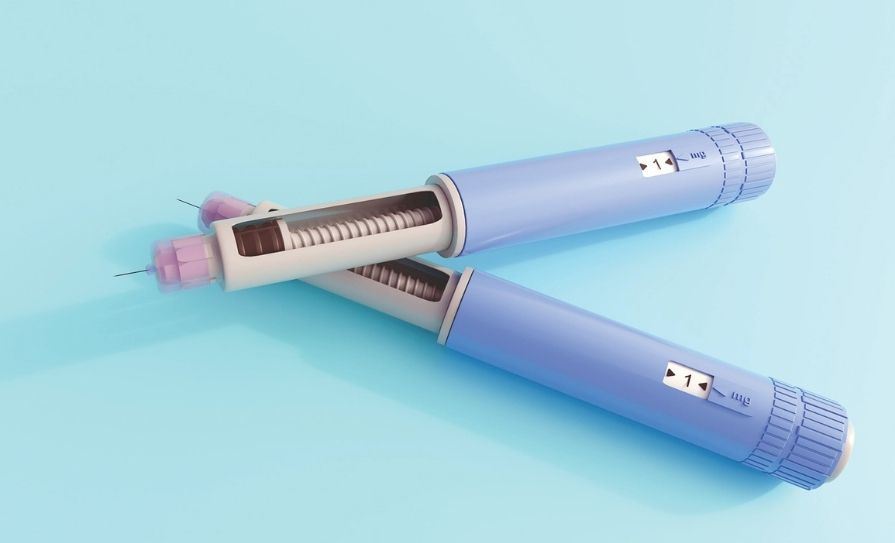
The introduction of GLP-1 AOMs has been a game changer. Although currently licensed for the treatment of obesity in the UK, tirzepatide (Mounjaro) and semaglutide (Wegovy) remain restricted from use in the NHS.
For tirzepatide, NICE recommends that it should be prescribed in addition to a reduced-calorie diet and increased physical activity to adults who have an initial BMI of 35kg/m2 or more and at least one weight-related comorbidity. Data from clinical trials suggest that tirzepatide (along with dietary changes and exercise support) is more effective when compared with dietary changes and exercise support alone.
Although the Medicines and Healthcare products Regulatory Agency has licensed tirzepatide for use in adults with a BMI of at least 27kg/m2 and one weight-related comorbidity, or a BMI of 30 without associated comorbidities, NICE guidance — which determines use in the NHS — recommends that the most cost-effective approach would be an initial BMI of at least 35kg/m2 and at least one weight- related comorbidity.
It has been estimated that approximately 3.4 million patients in England would be suitable for treatment under these NICE eligibility criteria. Due to lack of resources however, NHS England requested a ‘funding variation’, which was accepted by NICE. In this variation, the NHS is required to fund obesity treatment for patients with a BMI of over 40kg/m2 and four qualifying weight-related comorbidities, significantly reducing the number of obese people who can access AOMs on the NHS. There is, as yet, no guidance in Northern Ireland regarding the prescription — via the Health Service — of tirzepatide for management of obesity alone. However, it can be prescribed for the management of diabetes mellitus.
A pharmacy model
Given these restrictions on NHS access to AOMs, it is not surprising that more than 1.5 million adults in the UK are currently accessing AOMs privately, mostly through online pharmacies. Only 200,000 patients have had access to these GLP-1 treatments via the NHS; however, the majority have received prescriptions primarily for the management of type-2 diabetes. This raises concerns about health inequalities.
Delays in, and restrictions on, the rollout of these medications as recommended by NICE to eligible patients unable to afford private treatment, will likely contribute to the growing health inequalities in Northern Ireland. Obesity has been strongly linked with deprivation status and a recent Institute of Public Health report states “socially disadvantaged communities [are] experiencing an excess of obesity-related harms”.
But it is not just a matter of providing obese people with skinny-jabs. Wrap- around services that provide advice on diet and exercise as well as psychological support have been shown to improve adherence to AOM, long-term weight loss, and clinical safety. Wrap-around care must include, as a minimum, nutritional advice, physical activity guidance, and behavioural support over at least nine months.
Community pharmacies are well positioned to provide these wrap- around support services during monthly face-to-face reviews, easily aligning with medication supply and ensuring consistent patient monitoring.
Tony Blair Institute
A recent report by the Tony Blair Institute (TBI) argues that the NHS approach to obesity services is very resource-intensive, expensive, and not likely to deliver at scale given the large number of eligible patients and current capacity. The proposed model for wrap-around care is based on Eli Lilly’s SURMOUNT-1 trial of tirzepatide, with the cost in the first year per patient estimated at more than £1,200, equivalent to the annual cost of the medication itself.
With such a slow rollout, and its use of extensive resources, access to AOMs will continue to be largely determined by the patient’s ability to pay privately for treatment. Adopting a similar approach in Northern Ireland would inevitably further widen the health inequality gap. The TBI recommends that existing pharmacy services should be employed in the short-term to initiate the rollout of AOMs, including online pharmacies, while accepting concerns over the level of wrap- around support private online pharmacies can provide.
Keeping it ethical and legal
Regulators have been actively monitoring and challenging the inappropriate use of weight loss injections, especially those purchased online and without proper clinical governance to avoid serious adverse events, including hospitalisations and fatalities.
A community pharmacy approach would be a more practical and cost- effective midway solution — easily accessible, face-to-face, and capable of integrating both AOMs and lifestyle interventions at a lower cost in comparison, while also avoiding some of the risks involved with unsupervised online prescribing or inadequate support. Furthermore, community pharmacists play an important role in building trust and relationships with patients, which are crucial to improving health and wellbeing. These relationships help to empower patients, encourage better adherence to treatment plans, and foster open communication.
Adopting a pharmacy approach for AOM initiation, supply, and monitoring would make better use of currently limited NHS resources, while ensuring the rollout is more efficient and quicker at reaching those with greater health inequalities. Using established links with local GPsurgeries, community pharmacies can work with practices to ensure patients with the greatest clinical need are targeted first and that GPs are kept informed and consulted where necessary (ie, where additional monitoring of comorbidities is recommended).
For complex cases, or for those patients who require more specialised behavioural support, referral for a more intensive service (including dietitians and psychologists, etc) could be recommended.
Community pharmacy access to the Northern Ireland Electronic Care Record will be important. For example, having direct-write access and access to additional patient data, including information on comorbidities, would be help improve communication with other healthcare professionals and the care provided.
Pilot service
Northern Pharmacies Limited Trust Fund (NPLTF) provides funding and support to healthcare professionals, associations, institutions, or charitable organisations with a connection to pharmacy for training, research, education, and innovative service development.
NPLTF has agreed to pilot a service which aims to design, implement, and assess the impact of a community pharmacy-based weight-loss and lifestyle intervention programme over 12 months. The service will be delivered from 10 community pharmacies to a cohort of 200 patients who have a BMI of 35 or more, with at least one weight- related comorbidity.
The pilot will cover the provision of tirzepatide (Mounjaro), including the initial assessment, counselling, follow- up, and ongoing monitoring of patients. In addition, community pharmacists will provide wrap-around care on lifestyle, diet, and exercise advice, as well as guidance and behaviour change strategies, to support patients with lifestyle behavioural change.
The primary outcome of the service is that patients achieve a weight loss of at least 10 per cent of initial body weight within 12 months to ultimately improve health outcomes and slow or stop the progression of weight-related comorbidities.
It is hoped that the pilot will get underway in 2026 and report back in 2028 — at which time the service should, if successful, become a commissioned service and will be proof that community pharmacy can manage obesity in the community more cost-effectively than other sectors of the NHS.
Terry Maguire owns two pharmacies in Belfast. He is an honorary senior lecturer at the School of Pharmacy, Queen’s University Belfast. His research interests include the contribution of community pharmacy to improving public health.