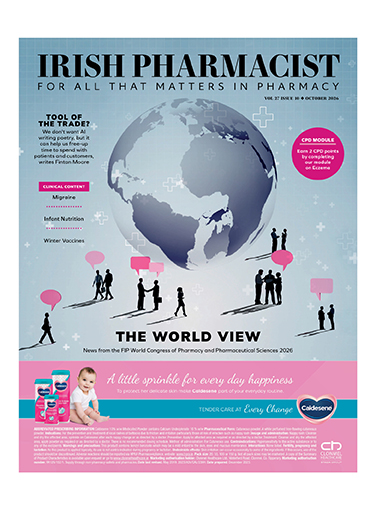
‘One FIP’ Takes Centre Stage as FIP President Opens 84th FIP World Congress in Montreal
“When we bridge science, practice and education, not only do we become One Pharmacy and One Health, we also unite as One FIP,” said International Pharmaceutical Federation (FIP) President Mr Paul Sinclair as he opened the 84th FIP World Congress of Pharmacy and Pharmaceutical Sciences in Montreal, calling for collective action to advance pharmacy’s contribution to global health.
Under the theme ‘One Health, One Pharmacy – Bridging science, practice and education’, Mr Sinclair reflected on a year of advocacy, collaboration and progress, highlighting FIP’s growing contribution to global health discussions and its work to strengthen the voice of pharmacists, pharmacy educators and pharmaceutical scientists.
“The work of the FIP Board, sectors, constituencies, officers, volunteers and team members is not purely to tick boxes and show output. It is about reaffirming pharmacists’ irreplaceable and invaluable role in the global health care system,” he said.
FIP’s close engagement with the World Health Organization (WHO) was a key focus, with Mr Sinclair highlighting the Federation’s extensive presence at the 79th World Health Assembly in May 2026. A 55-member FIP delegation represented pharmacy at more than 80 events, while FIP also participated in 15 partner events and hosted three side events focused on self-care, humanitarian action and access to medicines, and tobacco cessation.
“One Health is achieved when FIP remains closely aligned with the WHO,” he added.
The President also highlighted the importance of collaboration across health professions and the role of the congress in exploring how pharmacy can contribute to stronger primary health care, responsible use of medicines, resilient and sustainable supply systems, and a health workforce equipped to meet changing needs.
Looking ahead, Mr Sinclair highlighted the FIP Montreal Declaration on non-communicable diseases, which was launched during the second plenary session in collaboration with FIP Member Organisation the Canadian Pharmaceutical Association. He also highlighted FIP’s work to bridge science, practice and education through publications, toolkits, reports, multilingual resources, CPD Bites, podcasts, infographics, country profiles, journal articles and new programmes receiving the FIP Seal.
FIP also received the sad news that Dr Kamal Midha, FIP president 2006-2010, passed away in Abu Dhabi. Dr Midha was a visionary leader under whose leadership the establishment and inclusion of education as the third pillar of FIP was realised. “It seems fitting that we have received this news this morning, as Dr Midha’s extended FIP family, since Kamal was known to so many of us gathered here”, said Mr Sinclair. On that day, the FIP Council completed the mandate of a unified integrated FIP Board and reform of all structures, realising Kamal’s vision at the conference in 2026.
Emphasising that progress depends on collective action across the global pharmacy community, he concluded by calling on the global pharmacy community to continue working together to advance the profession worldwide: “It is this united collective among us, globally, that will achieve the mandate of advancing pharmacy worldwide. Forward with Pharmacy. Forward with FIP.”
New FIP Policy Calls for Greater Pharmacist Involvement in Reducing Psychoactive Substance-Related Harm
Pharmacists should play a greater role in preventing substance use disorders (SUDs), supporting early intervention and reducing harms associated with the non-medicinal use of psychoactive substances, according to a new Statement of Policy released by the International Pharmaceutical Federation (FIP).
The statement reflects the latest evidence on prevention, treatment support and evidence-informed harm reduction. It recognises substance use disorders as a major public health challenge and positions pharmacists as essential members of multidisciplinary teams working to improve health outcomes while reducing stigma and barriers to care.
“Substance use disorders affect individuals, families and communities in every region of the world, yet many people still face significant barriers to accessing timely support,” said Prof. Nadia Al Mazrouei, co-chair of the Policy Committee. “Pharmacists are among the most accessible healthcare professionals and are well positioned to identify risks early, provide trusted advice, support safer medicine use and connect people with appropriate care before preventable harm occurs.”
The policy statement, replacing FIP’s 2018 Statement of Policy on reducing harm associated with drugs of abuse, adopts a prevention-first, person-centred approach grounded in public health, human rights and social justice. It highlights pharmacists’ contributions across the continuum of care – from discouraging the non-medicinal use of psychoactive substances obtained through medical pathways and preventing medicine-related SUDs, to supporting treatment, overdose prevention and evidence-informed harm reduction services where permitted.
Recognising that substance-related harms are influenced by broader social, economic and environmental factors, the policy calls for co-ordinated action across healthcare, social care and community services.
The recommendations urge governments and policymakers to remove unnecessary barriers that limit pharmacists’ contributions, including expanding access to overdose prevention interventions such as naloxone where appropriate, supporting collaborative models of care and investing in education, digital infrastructure and sustainable remuneration for pharmacist-delivered services.
“Supporting people affected by substance use disorders requires compassion, collaboration and evidence-based care,” said Dr Andrew Gray, co-chair of the Policy Committee. “This statement recognises that pharmacists can make a meaningful contribution not only through treatment support, but also by preventing problems before they develop, empowering patients and strengthening integrated care pathways within their communities.”
New FIP Policy Statement Calls for Updated Codes of Ethics to Support the Evolving Role of Pharmacists
Pharmacy organisations, regulators and educators should strengthen and regularly update their codes of ethics to reflect the rapidly evolving role of pharmacists and emerging healthcare challenges, according to a new Statement of Policy released by the International Pharmaceutical Federation (FIP).
Replacing FIP’s 2014 statement of professional standards in this area, the updated policy provides guidance for developing and implementing modern codes of ethics that apply to pharmacists across all areas of practice. It recognises that pharmacists’ responsibilities now extend well beyond medicines supply to include patient care, research, education, leadership, regulation, public health and pharmaceutical innovation. The statement reinforces pharmacists’ ethical responsibility to exercise independent professional judgement, maintain competence through continuing professional development, and uphold the highest standards of care regardless of where they practise.
“Ethics has always been the foundation of pharmacy practice, but the profession has evolved significantly over the past decade,” said Mr Luís Lourenço, co-chair of the Policy Committee. “Pharmacists today are making increasingly complex clinical, professional and technological decisions. Our codes of ethics must evolve alongside practice to provide a clear framework that supports professional judgement, protects patients and strengthens public trust.”
The statement outlines the principles that should underpin national codes of ethics, including integrity, professional accountability, patient-centered and person-centred care, confidentiality, respect for human rights, non-discrimination and interprofessional collaboration.
“Strong ethical frameworks are essential to address emerging ethical priorities, including the responsible use of artificial intelligence and digital health technologies, pharmacist wellbeing, conscientious objection, environmental sustainability and protection from undue commercial or organisational pressures,” said Dr Betty Chaar, co-chair of the Policy Committee. “By updating and strengthening codes of ethics, we can help pharmacists continue to deliver safe, equitable and high-quality care while maintaining the confidence of the communities they serve.”
The updated statement includes recommendations for pharmacy organisations, governments and policymakers, education providers and patient organisations. It also outlines FIP’s own commitments, including supporting the development and regular review of national codes of ethics, promoting ethics education, facilitating international dialogue on professional ethics, and gathering global information on ethics-related activities across the profession.