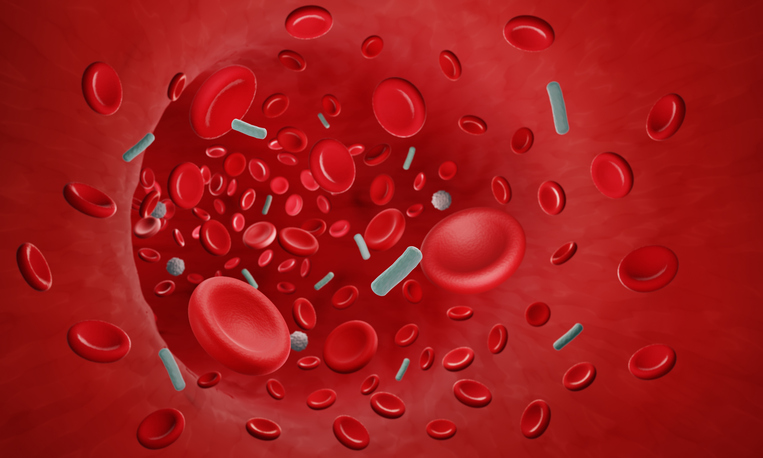
A new study led by Queen’s University Belfast has revealed that Klebsiella pneumoniae, a bacterium responsible for life-threatening bloodstream and lung infections, can directly disrupt the ability of small blood vessels to relax and regulate blood flow.
The research suggests that by disrupting normal blood vessel relaxation, Klebsiella may create conditions that help infection take hold or persist, while also increasing the risk of complications during severe disease.
The findings could open the door to future studies testing whether drugs that protect blood vessel function might be used alongside antibiotics to support patients with severe Klebsiella infection.
The study has been published in the journal Nature Microbiology.
The research was carried out by Queen’s University Belfast at the Wellcome-Wolfson Institute for Experimental Medicine in collaboration with the University of Strathclyde.
The paper was jointly supervised by Prof Jose Bengoechea, Professor in Microbiology and Infectious Diseases Infection Biology at the London School of Hygiene and Tropical Medicine; and Prof Tim Curtis, Professor of Vascular Physiology at Queen’s University Belfast.
Klebsiella pneumoniae is a major cause of hospital and community infections and is becoming increasingly difficult to treat due to antibiotic resistance.
Understanding how it harms the body beyond simply multiplying or evading antibiotics could help researchers develop new approaches to reduce complications from serious infections.
The researchers found that Klebsiella does not simply trigger general inflammation in the body. Instead, it deploys its outer capsule and a microscopic molecular delivery system to disrupt the signals produced by the lining of blood vessels.
These signals typically help vessels widen, maintain healthy blood flow, and support the body’s response to infection.
The team also discovered that Klebsiella blocks nitric oxide, a key natural signal that tells blood vessels to relax. In experimental models, this disruption of blood vessel function was associated with a rise in blood pressure.
Importantly, the researchers were able to restore normal blood vessel relaxation by targeting the harmful stress signals activated by the bacterium.
Prof Jose Bengoechea explained: “Klebsiella pneumoniae is best known as a dangerous and increasingly drug-resistant infection. Our study shows that it can also actively manipulate the body’s own blood vessels.
“By switching off the signals that normally allow vessels to relax, the bacterium creates conditions that help it survive while potentially making infection more harmful for the patient.”
Prof Tim Curtis added: “Blood vessels are not passive tubes – they are living tissues that constantly sense what is happening around them and adjust blood flow.
“We found that Klebsiella effectively puts the brakes on the signals that tell vessels to relax. That gives us a much clearer picture of how this bacterium can disrupt blood vessel function, and it points to new ways we might protect patients in the future.”
Prof John McCarron from the University of Strathclyde said: “This study shows that Klebsiella does not simply damage blood vessels through inflammation. Instead, the bacterium selectively rewires the signalling pathways that allow blood vessels to relax. One of the most surprising findings was that the cells lining blood vessels continue to generate the signals that normally trigger relaxation, yet the vessels are unable to respond.
“This reveals a previously unrecognised mechanism by which bacterial infection manipulates vascular function and highlights new opportunities to protect the circulation alongside conventional antibiotic therapy.”