An overview of the common considerations when getting the young ones ready for a return to school with some back-to-school ‘hacks’
The back-to-school period can be a busy time for both the children and their parents or carers. Colder weather, plus getting back to the classroom where mixing with other children presents its own risk of infections, makes the back-to-school time challenging.
However, with the proper preparation, kids can be healthy and happy going back to the classroom.
Many children are less active in autumn than they are in summer, so it’s a good idea to enrol them in extra-curricular activities wherever possible. Getting plenty of physical activity will also help kids to better deal with the stress of the changes to their routine.
According to the HSE, there are some simple ways to help keep a child healthy when they return to the classroom. Having a thermometer handy is one way to keep ahead of potential infections. Children should also be taught good hand hygiene to help minimise the risk of infections spreading.
It’s always a good idea to have basic medications to hand, including pain relief medications, and saving important numbers on your phone in case of illness is also a forward-thinking move. Children who are prone to anxiety often grind their teeth, which itself can lead to headaches. Parents and carers can also check out mychild.ie, where they will find a range of evidence-based advice on issues such as cold and flu, fever, head lice, and more.
It is also important to check in on a child to see how they are coping emotionally with the return to school. This is also a vital condiseration when a child is starting preschool or primary school. Often, the transition from primary to secondary school is also a difficult time for young people.
According to the HSE: “Above all, it’s important to listen to what your child tells you about their anxieties or worries. Try to validate them by telling them ‘I can see why you are worried’. You can help your child to understand that anxiety is normal, everyone has it, even you. Explain to them there are ways we can manage worry and deal with the things we fear together. For example, talking with an adult they trust, such as a parent or teacher, and reminding them of their strength and how they overcame fears in the past.”
Spending some extra time with a child who is finding the back-to-school transition difficult can help them significantly.
Spending some extra time with a child who is finding the back-to-school transition difficult can help them significantly
Nutrition vs obesity
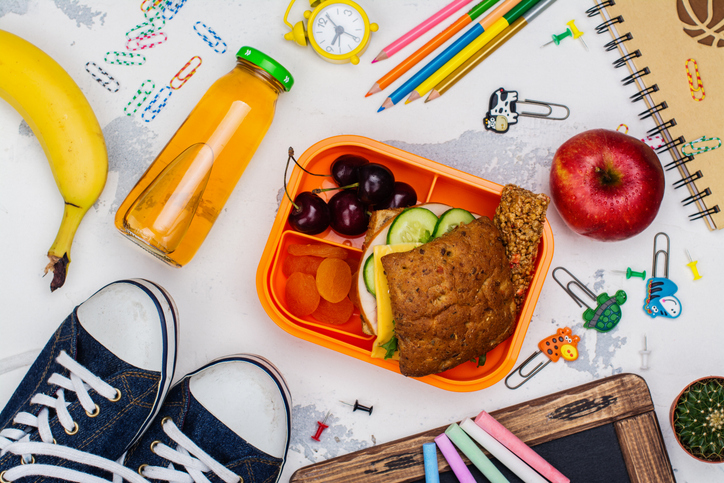
Getting the correct nutrition is vital for a child’s concentration, health, and overall development. Good nutrition can also help prevent the child developing certain serious diseases later in life. The HSE estimates that around one-in-five children in Ireland are overweight or obese, but many of these children are in fact not getting enough nutrition, despite being overweight.
Some children may have health or social circumstances that mean they are unable to get the proper nutrition at home, and in these cases, supplements can help to address that deficiency. The Food Pyramid is a useful guide to make sure a child is getting the right nutrition purely through their diet. It can be accessed at the HSE website, www.hse.ie.
The HSE’s Healthy Food for Life major recommendations are:
- Eat up to seven servings of vegetables, salad and fruit a day.
- Limit intake of high-fat, sugar, salty food and drinks.
- Use the food pyramid as a guide for serving sizes.
- Increase physical activity levels.
- Start making small changes now.
Sleep routines
One of the biggest challenges of getting a child back to school can be adjusting the sleep routine. Getting the bedtime routine can be as difficult as adjusting to new teachers or meeting new people for a child. Waiting until the night before the child goes back to school can be stressful and disruptive for both the child and their parents. The US National Sleep Foundation (NSF) reported that in a 2024 survey, it was found that eight-in-10 teenagers don’t get enough sleep.
The NSF recommends shifting bed and wake times by 10-to-15 minutes each day for about a week, until the family settles on the schedule needed for the return to school. In terms of how much sleep is required, the NSF recommends:
- Children: Preschoolers (3-5 years): 10 to 13 hours.
- School-age kids (6-13 years): 9 to 11 hours.
- Teenagers: (14-17 years): 8 to 10 hours.
Getting the routine back on track often brings conflict between the child and their parents. However, the NSF points out that staying up late is not a case of the child being stubborn — ‘chronotype’ is the biological timing of sleep-and-wake, and it shifts to later times as young people move through adolescence. “That shift peaks in the early twenties, which means a 16-year-old’s body may not feel sleepy until well after a 9-year-old’s does, even on an identical schedule,” says the Foundation.
It is also recommended to manage children’s allergies when they go back to school. These can cause headache, fatigue, sneezing, watery eyes and runny nose, all of which will affect a child’s concentration and their overall wellbeing. It is also important for a parent or carer to be aware of any food allergies and take the appropriate precautions.
Head lice
Head lice infestations are another annoying back-to-school problem, but one that causes stress and embarrassment, particularly among parents with their first child. They should be reassured that having head lice does not mean that their child’s hair is dirty: The cleanest hair can get head lice and nits. In fact, head lice are more attracted to living in clean, washed hair. Head lice are predominantly spread through head-to-head contact.
According to the HSE, the only reliable way to identify the problem is by finding live lice and nits in the hair, and they need to be treated as soon as they are found. Everyone in the family should also be treated at the same time, adding to the inconvenience. There is a range of effective formulations of lotion to kill head lice and eggs, as well as different types of combs, but successful treatment should result in the lice dying within one day after treatment.
As stated, head-to-head contact is the main form of transmission but children with an infestation should also not share hair ribbons and ties, combs, brushes, hats or scarves at school, as this can increase their chances of an infestation, and makes it more likely that they will spread them to other children.
Children with an infestation should also not share hair ribbons and ties, combs, brushes, hats or scarves at school
As always, check with the pharmacist on duty if you suspect any products you recommend may interact with medications they are already taking, or if the child has specific health needs.
Therapies
To tackle annoying head lice infestations, the Hedrin range contains a number of effective products. One of these is Hedrin Once Head Lice Spray Gel 100ml. This therapy helps kill head lice and eggs in one 15-minute treatment. Only one application is required and it contains penetrol and can be used as often as required without the lice developing resistance. It is easy to apply, skin-friendly, and has no residual odour.
Another effective product to eradicate lice and nits is Full Marks Solution – 100ml. This product is clinically proven to kill head lice and eliminate their eggs. It is a quick and easy 10-minute treatment with low odour, is toxin-free, and contains no traditional pesticides. Full Marks Solution has a physical method of action on the lice, causing them to dehydrate and die. Each pack contains its own metal fine-tooth comb.
For general aches and pains, Panadol Extra Tablets are a fast-acting and effective pain relief medication containing paracetamol. Panadol tablets fight against pain such as headache, muscle pain, backache and toothache, among other common pains. This medication also reduces fever and pain associated with colds and flu and contains caffeine to help the effectiveness of paracetamol. Suitable for children and adolescents aged 12 years and over and not to be taken with other products that contain paracetamol.
Also for pain management, Brupro Tablets 200mg Ibuprofen 24 Tablets are clinically proven to be effective in lowering fever and managing general pain such as back pain, headache and dental pain, among others. Also suitable for the treatment of colds and flu, each tablet contains 200mg of Ibuprofen. Suitable for adolescents and adults over 12 years of age.
If a child has extra nutritional needs, the Wellkid range provides a number of clinically-proven options. Among the range is Vitabiotics Wellkid Smart Chewable Multivitamins, which includes vitamins A, C and D. The UK Department of Health advises that all children up to the age of five years should be given a supplement that contains these vitamins. These multivitamins are low in sugar and contain xylitol, a naturally-occurring sweetener which is kind to teeth. Free from artificial colours, preservatives, lactose, gluten, salt or yeast. Also in the same range are Vitabiotics Wellkid Soft Jelly 30 Pastilles Strawberry, a multivitamin formula to help safeguard the nutritional intake of children aged four-to-12 that is available in strawberry and orange flavours. They contain 11 vitamins, plus flaxseed oil, and include all eight B-complex vitamins, plus vitamin C, D and E. The range also includes Vitabiotics Wellkid Multi-vitamin Liquid 150ml and Vitabiotics Wellkid Calcium Liquid 150ml.
The Nutricia range includes a number of options to suit children’s nutritional needs. One of these options is Fortini Strawberry 200ml, which is a nutritionally-complete sip feed for children. This product may be recommended by a doctor or dietitian and is a high-energy, nutritionally-complete drink containing 1.5kcal/ml. Fortini Strawberry 200ml is suitable for disease-related malnutrition in children from one year of age and can be used to supplement the diets of children who are unable to meet their nutritional requirements from other foods. It can also be used as a sole source of nutrition for children aged one-to-six years or who are eight-to-20kg in body weight.
Suitable for children with asthma and eczema.
To boost immune system function, Pharmaton Immuno10 30 Caplets are scientifically formulated with a high volume of 10 vitamins and minerals that specifically help to support immune system functioning. Also beneficial for vitality and mental performance, this product is high in vitamins C, D, B6, B9, B12, and minerals iron, zinc, copper, selenium, that each contribute to the normal function of the immune system. Also available in packs of 100 caplets. Also in the Pharmaton range are Pharmaton Vitality 11 30 Caplets, and Pharmaton Fizzi Effervescent 20s.
References on request