Winter takes a toll on our feet, but there are ways to prevent and treat common problems
Our feet need to cope with some unpleasant transitions in the winter months. As the temperatures drop, winter coats, scarves and gloves are brought out of storage and likewise, our feet, which got plenty of sunshine and fresh air in the summertime, are again wrapped up in winter shoes and boots.
The body’s reaction to lower temperatures means it will slow down blood circulation in an effort to keep the body’s core temperature high. This can be a troublesome time for people who have a pre-existing foot condition. Likewise, people with circulatory problems are especially vulnerable to drops in temperature. Neuropathic conditions can be exacerbated in the winter months, causing problems such as pain or a burning sensation, among other symptoms.
Raynaud’s phenomenon is a condition that is most prevalent in women with circulation issues and is exacerbated when toes or fingers are exposed to cold air. The skin can even turn blueish-white due to the capillaries in fingers being affected or toes to spasm, which restricts the blood flow.
Too much exposure to cold air can also cause chilblains. These are caused by inflamed blood vessels and result in red itchy patches on the feet or hands, as well as swelling and sometimes blisters.
The most common foot problems in winter include toenail fungus and or dry/cracked skin. Fungal infections are more prevalent in winter and are compounded by thick socks that retain moisture. This turns the nails into fertile ground for a fungus to breed. Cracked heels are often ignored and left untreated, which can result in cracked skin, which can then lead to infections.
Fungal infections
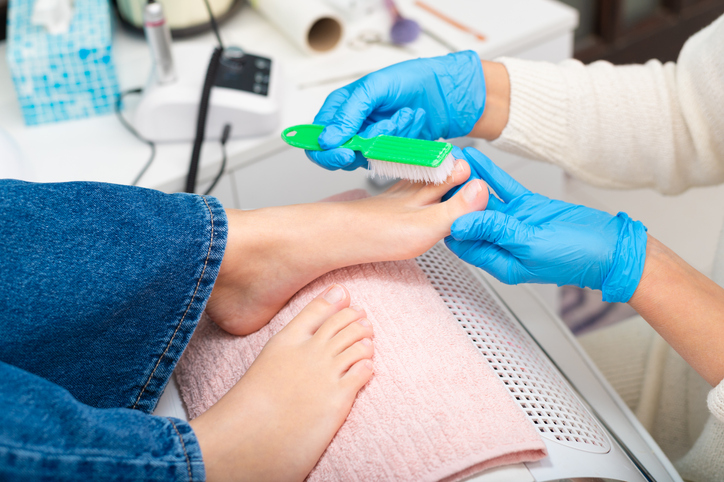
Fungal infections are mostly associated with feet, but can also occur on hands too. Fungal infections typically make nails thicker but more brittle, and they may also change colour and be painful. The infections often begin at the nail’s edges, and then spread to the middle. At this point, the nail may turn yellow and may detach. In some instances, pieces of the nail break off.
The HSE recommends that a customer with diabetes who has symptoms of a fungal foot infection should see their GP for further advice. Also, even if a customer does not have diabetes, they should be referred to their GP if the nail infection is severe, if the infection has spread to other nails, and if OTC treatments have not worked.
Often, a patient will have athlete’s foot that goes ignored and untreated. Athlete’s foot is also caused by a fungus and this can easily spread to the nails, causing a fungal nail infection. Other causes include walking barefoot where somebody else with an infection has walked, such as gym showers or changing rooms. The infection can also be spread by physical contact, sharing towels, or sharing nail clippers.
For these reasons, flip-flops should be worn at the gym or swimming pool and socks should be changed every day. Feet should be kept clean and dry and if Athlete’s foot does occur, it should be treated as quickly as possible.
Advice published in the US National Library of Medicine, updated in July 2025, illustrates the connection between Athlete’s foot and nail fungus. The authors wrote: “Fungal nail infections are usually caused by fungi that infect the skin (dermatophytes). But they are sometimes caused by yeast or mold instead. Yeast infections often occur on the fingernails. A lot of people who have a nail fungus also have Athlete’s foot. Because of this, experts believe that nail fungus is often caused by Athlete’s foot.”
They continued: “Nail fungus can increase the risk of a bacterial infection of the surrounding skin in people with diabetes or a weakened immune system. The nail might also thicken, which can make it difficult to walk (for instance, if your shoe presses against the nail).”
Cracked skin
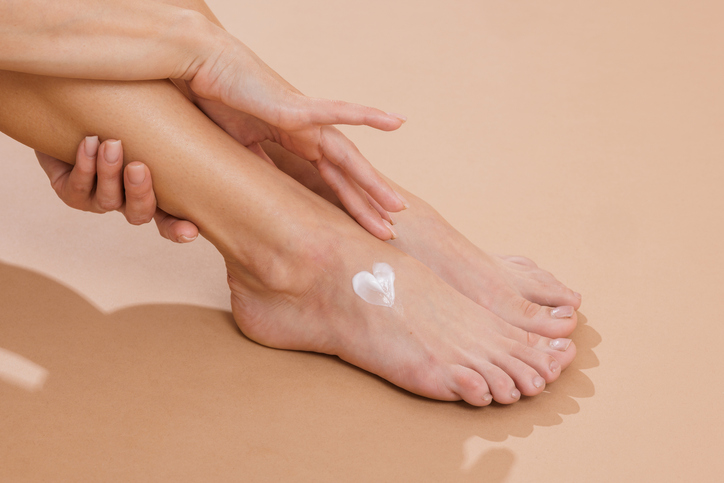
Another common winter foot problem is dry and cracked skin, particularly on the heel. This can be troublesome for people with no pre-existing conditions, but for those with diabetes or anhidrotic skin — which is dry and lacks sweat, depriving the foot of moisture — it can adversely affect their quality of life. Anhidrosis can be caused by a medical condition, or by certain medications.
Diabetes is a particular problem when it comes to dry and cracked skin. The HSE estimates suggest that assuming a prevalence rate of diabetes of 6 per cent of the population, that means there are approximately 309,000 people in Ireland have diabetes. Those figures were compiled for 2022, so the rate may be even higher now. A significant proportion of these people will also be suffering with foot problems.
Customers with diabetes who are looking for foot care products should be given special attention. They should check their feet every day, particularly the sole of the foot, between the toes, and around the heels. People with diabetes should be on the lookout for cuts, corns, blisters, spots, hard skin, or any red or swollen areas.
They should also wash their feet daily using warm water, a mild soap and a cloth. They should also avoid walking in bare feet, as even the smallest cut caused by stepping on something sharp can become a problem for diabetic people. Toenails should be cut straight across, rather than in a curve.
Minor cuts and blisters should be treated by bathing the foot in freshly-boiled and cooled water, followed by the use of an antiseptic cream and a sterile dressing. In terms of shoes, these customers should choose soft, cushioned or seamless leather-upper shoes with good arch support. The footwear should be broad and deep enough, and heavy stitching, buckles or straps should be avoided.
Therapies
As with all products you recommend, if there is any doubt, consult with the pharmacist on duty to work out how to best care for patients with foot problems, bearing in mind any underlying conditions.
The Flexitol range contains a number of therapies to hydrate dry, cracked heels and feet. Flexitol Heel Balm 112g is suitable as a treatment, and also as a preventive measure, and is suitable for use by diabetics. This product also helps prevent blisters and friction during exercise and when first wearing new shoes. The combination of emollient ingredients actively boosts moisture deep below the skin’s surface, and visible results are apparent three days after application. It can also be applied daily as a preventative moisturiser. Flexitol Rescue Hard Skin & Callus Balm 56g also produces results in three days and is also suitable for diabetics. The active ingredients include 22% urea and a blend of Alpha Hydroxy Acids to penetrate deeply and gently exfoliate hard or callused skin, without harming the tissue underneath. Other products in the range include Flexitol Rapid Revive Overnight Cream, which is clinically proven to replenish moisture overnight. Its formula, which includes shea butter, helps to soothe very dry, rough skin on the feet, providing visible results within 24 hours. Flexitol Dry Skin Foot & Leg Cream is a softening formula containing 10% urea hydrating complex combined with vitamin E to moisturise and hydrate dry skin on the feet and legs. It is clinically proven to effectively soften dry skin.
For nail fungus, the Nailner range includes a number of clinically-proven options. Nailner 2-IN-1 Brush XL has been shown in tests to treat and prevent nail fungus, but it also brightens the appearance of nails, with the results visible after seven days. It also helps to prevent nail fungus and is suitable for treating multiple nails. The range also includes the Nailner Regular Brush, which is proven to treat and prevent nail fungus. It is easy to use, with no filing needed, and there are up to 300 applications per bottle. Also in the range are the Nailner Multi-Action Pen, and the Nailner Multi-Action Brush. These products treat and brighten nails, improving appearance of nails in just seven days. No filing is required and both are clinically proven to be effective against nail fungus. The Nailner range also includes many other products to comprehensively look after nails, including nail-strengtheners, protectors, and products to improve the nail’s colour.
For Athlete’s foot, the Lamisil range is clinically proven to help. Lamisil AT Cream 1% treats Athlete’s foot within a week and relieves symptoms, including itching, burning, cracking, and helps to prevent recurrence. It is also proven to relieve the symptoms of ‘Jock Itch’, another common fungal infection. Lamisil ONCE 1% cutaneous solution treats Athlete’s foot in one application and starts to work in 15 minutes. It prevents recurrence for up to three months and is suitable only for customers over 18 years old.
Desenex Athletes Foot Ointment 30g is another effective treatment for Athlete’s foot and combines the antifungal properties of zinc undecylenate and undecylenic acid. This helps to alleviate symptoms like itching, redness, and discomfort. This treatment forms a protective barrier on the skin, helping to prevent further irritation and reinfection.
Daktarin Cream 30g is suitable not only for treating Athlete’s foot, but can also be used for nappy rash. The moisturising properties in this cream also help to soothe cracked and red skin and can be used on the hands, nails, feet, outer ear, trunk and groin.
CeraVe SA Foot Cream is another option. It is a rich, non-greasy cream that has been specially formulated to provide intensive moisturisation and gentle exfoliation for dry, rough feet.