Findings from a clinical trial investigating repeated ketamine infusions for treating depression have revealed no extra benefit for ketamine when added onto standard care for people admitted to hospital for depression. The paper was published in the journal JAMA Psychiatry recently.
The KARMA-Dep (2) Trial involved researchers from St Patrick’s Mental Health Services, Trinity College Dublin, and Queen’s University Belfast, Ireland. It was led by Declan McLoughlin, Research Professor of Psychiatry at Trinity College Dublin and Consultant Psychiatrist at St Patrick’s Mental Health Services.
Depression has been recognised by the World Health Organisation as a leading cause of disability globally. According to the Health Research Board’s most recent report, there were 15,631 adult admissions to psychiatric services in Ireland in 2023. Similar to previous years, depressive disorders accounted for the highest proportion (about 24 per cent) of all admissions.
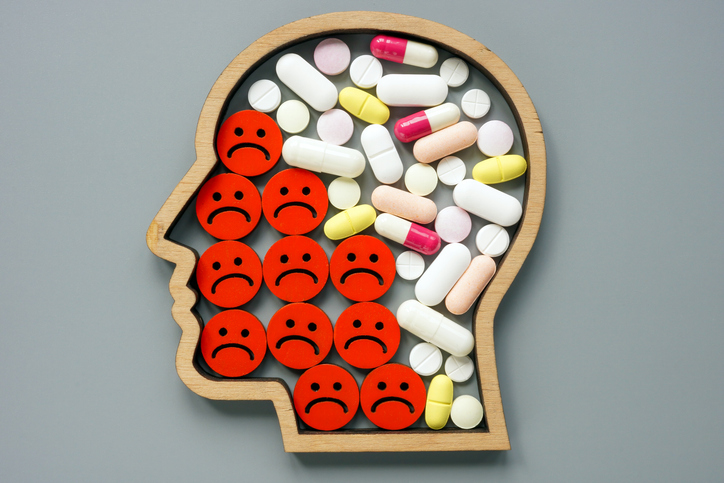
Studies show that about 30 per cent of people with depression do not respond sufficiently well to conventional antidepressants, which mostly target monoamine neurotransmitters, for example serotonin, dopamine and noradrenaline. There is thus a need for new treatments. One such novel treatment is the dissociative anaesthetic ketamine when given intravenously in low sub-anaesthetic doses. Ketamine works differently to other antidepressants and is believed to mediate its effects in the brain through the chemical messenger glutamate.
Single infusions of ketamine have been reported to produce rapid antidepressant effects, but these disappear within days. Nonetheless, ketamine is increasingly being adopted as an off-label treatment for depression, even though the evidence to support this practice is limited. One possibility is that repeated ketamine infusions may have more sustained benefit. However, this has so far been evaluated in only a small number of trials that have used an adequate control condition to mask the obvious dissociative effects of ketamine, ie, altered consciousness and perceptions of oneself and one’s environment.
KARMA-Dep 2 is an investigator-led trial and was funded by the Health Research Board. The randomised trial was developed to assess antidepressant efficacy, safety, cost-effectiveness, and quality of life during and after serial ketamine infusions when compared to a psychoactive comparison drug midazolam. Trial participants were randomised to receive up to eight infusions of either ketamine or midazolam, given over four weeks, in addition to all other aspects of usual inpatient care.
The trial findings revealed that:
- There was no significant difference between the ketamine and midazolam groups at the end of the treatment course on the trial’s primary outcome, which was an objective measurement of depression. This was assessed with the commonly used Montgomery-Åsberg Depression Rating Scale (MADRS).
- There was no significant difference between the two groups at the end of the treatment course on a subjective, patient-rated, scale for depression. This was assessed with the commonly used Quick Inventory of Depressive Symptoms, Self-Report scale (QIDS-SR-16).
- No significant differences were found between the ketamine and midazolam groups on secondary outcomes for cognitive, economic or quality-of-life outcomes.
- Despite best efforts to keep the trial patients and researchers blinded about the randomised treatment, the vast majority of patients and raters correctly guessed the treatment allocation. This could lead to enhanced placebo effects.