
This module provides practical guidance for pharmacists with insight into prescriber and mental health professional decision-making rationale in treatment and care. On completion of this module, it is expected the reader will have an enhanced understanding of the importance of NICE guidelines, the most common medications to treat schizophrenia, and the increasingly expanding role of pharmacists within multidisciplinary care.
Pharmacists’ expanding role in schizophrenia care Traditionally, community pharmacists’ input in schizophrenia
has been limited to dispensing and opportunistic advice, such as counselling on side-effects or adherence. However, international examples demonstrate how pharmacists can play a far greater role in direct patient care and in supporting mental health services.
International settings where pharmacists are moving beyond the traditional role of dispensing and checking medicines for schizophrenia management
In the United Kingdom, independent pharmacist prescribers have authority to initiate and adjust treatment, including antipsychotics, under clinical frameworks. Many are embedded within secondary care mental health services, where they titrate doses, oversee medication switches, and carry out structured monitoring of side-effects. Pharmacist-led clozapine clinics are common, with pharmacists ensuring blood test monitoring, safety counselling, and adherence support.
In Scotland and Wales, pharmacists working in community mental health teams provide medicines optimisation services that extend beyond dispensing. They review patients holistically, advise psychiatrists and nurses on drug choice, dosing, contraindications, and drug interactions, and monitor metabolic side-effects such as weight gain, dyslipidaemia, and diabetes that are common with long-term antipsychotic use.
In the Netherlands and Scandinavia, pharmacists are integrated into multidisciplinary teams and actively participate in shared decision-making. They balance treatment efficacy and tolerability with cost-effectiveness, aligning therapy with regional health authority priorities on rational prescribing and generic use.
Elsewhere, in Canada and parts of Australia, pharmacists operate under collaborative practice agreements that allow initiation or modification of prescriptions for mental health conditions. These pharmacists frequently provide structured patient and caregiver education, focusing on adherence, early recognition of relapse, and strategies to minimise side-effects, contributing to reduced hospital admissions and improved long-term outcomes.
Advantages of expanding pharmacists’ roles
Evidence internationally from experience and findings where pharmacists have expanded roles as well as studies have found:
- Full utilisation of clinical expertise: Pharmacists are highly trained in pharmacology, therapeutics, and medicines optimisation. Expanding their roles allows healthcare systems to make better use of this expertise rather than limiting pharmacists to supply functions.
- Improved patient outcomes: When pharmacists are directly involved in prescribing, monitoring, and counselling, patients are more likely to receive appropriate therapy, achieve better symptom control, and experience fewer medication-related problems such as side-effects or drug interactions.
- Enhanced safety and risk reduction: Pharmacists’ detailed knowledge of medicines helps identify and prevent errors, avoid contraindications, and ensure monitoring protocols (eg, for clozapine) are followed correctly.
- Better use of stretched healthcare resources: Involving pharmacists in prescribing and medication management reduces pressure on doctors and mental health services. This allows faster patient access to care while ensuring safe and cost-effective prescribing, including maximising the use of generics.
- Accessibility and continuity of care: Pharmacists are often the most accessible healthcare professionals. Their expanding role provides patients with more frequent and convenient access to expert medicines advice, particularly valuable for those with chronic conditions such as schizophrenia.
- Stronger interprofessional collaboration: Pharmacists embedded in mental health teams bring a medicines optimisation perspective, strengthening team-based decision-making. This ensures prescribing decisions are evidence-based, cost-effective, and patient-centered.
- Patient empowerment and adherence: Pharmacists provide structured education for patients and families, improving understanding of treatment, addressing concerns about side-effects, and boosting adherence, critical in conditions like schizophrenia where relapse can have major consequences.
- Future-proofing healthcare delivery: As demand on health systems grows, expanding pharmacists’ roles supports service resilience. It creates new care pathways that reduce hospitalisations, improve follow-up, and optimise the use of healthcare budgets.
Rationale for detailed insight into the prescriber and mental health team decision- making and actions
Much of this article reflects prescriber and mental health team viewpoints, covering prescribing rationale, monitoring test protocols, counselling strategies, and best practice from service and health authority perspectives. Understanding these considerations is vital as pharmacists increasingly expand into prescribing, medicines optimisation, and mental health team integration.
Even community pharmacists who only occasionally dispense antipsychotics benefit from recognising prescriber decision-making. This knowledge clarifies drug choices, dose changes, and monitoring, helping pharmacists spot risks, prevent problems, and deliver meaningful interventions.
A broader perspective also strengthens pharmacist–patient engagement, enabling more targeted advice and support. Even when
limited to dispensing, pharmacists can contribute to safer care. This principle extends beyond schizophrenia to all chronic diseases, where insight into prescriber rationale enhances outcomes, safety, and patient support.
Use of NICE guidelines as a primary reference:
Why? For this article, NICE guidelines are the primary, but not only, reference source.
International recognition and authority
NICE guidelines are recognised worldwide as comprehensive, evidence- based clinical guidance, created through systematic reviews, expert consensus, and rigorous health-economic evaluations.
Why are NICE guidelines used internationally?
Many healthcare systems lack detailed, regularly-updated clinical guidance. NICE fills this gap by offering structured, reliable, and frequently updated recommendations to support decision-making.
Use of NICE guidelines abroad
Some countries adopt NICE outright, particularly in chronic disease, mental health, and primary care. Examples include Qatar, UAE, Saudi Arabia,
A broader perspective also strengthens pharmacist–patient engagement, enabling more targeted advice and support
South Africa, Kenya, Uganda, Botswana, Jamaica, Trinidad, Malta, Kosovo, and Moldova. These systems rely on NICE for its evidence base, credibility, and adaptability where local guidance is limited.
Other systems (Ireland, Australia, New Zealand, Canada, parts of the EU) use NICE as a benchmark when developing or revising their own.
Even where strong local guidelines exist (eg, USPSTF, AHA/ACC in the US; CADTH in Canada), NICE is often cited in reviews and policy discussions.
Adapting to local contexts
Though tailored to the UK, NICE’s clinical recommendations are highly transferable. Cost-effectiveness thresholds, service delivery, and drug access may vary, but the underlying evidence and principles remain globally relevant.
Epidemiology and burden of schizophrenia Lifetime risk of schizophrenia is approximately 1 per cent. Onset typically occurs in late adolescence through the early 30s, with men presenting a few years earlier on average. The disorder carries substantial personal, social and economic burden: All-cause mortality is markedly elevated, and functional recovery depends on timely access to treatment, social inclusion, housing stability, and support with employment or education. Psychosis can be episodic with partial or full remission between episodes, but negative and cognitive symptoms often persist
and drive disability.
Three main classes of symptoms
- Negative symptoms of schizophrenia: These are the absence or loss of normal functions, such as reduced motivation, lack of pleasure, social withdrawal, and blunted emotional expression.
- ‘Positive’ symptoms of schizophrenia: These are experiences that add to normal functioning, such as hallucinations, delusions, disorganised thinking, and abnormal behaviours.
- Cognitive symptoms of schizophrenia: These are difficulties with thinking processes, such as problems with attention, memory, planning, and decision-making.
Substance use (especially tobacco and high-potency cannabis) is common and worsens outcomes. Pharmacists frequently see the downstream impact, including polypharmacy for cardiometabolic conditions, adherence drift, or drug-drug interactions, so are well placed to intervene early.
Aetiology and pathophysiology
Schizophrenia arises from a complex interplay of genetic vulnerability and environmental exposures. Hypotheses include dysregulated dopaminergic signalling in mesolimbic and mesocortical pathways (informing antipsychotic D2-receptor antagonism/ partial agonism), glutamatergic and GABAergic dysfunction, neurodevelopmental factors, and stress-diathesis mechanisms. There
is no single diagnostic biomarker. Neuroimaging and cognitive testing reveal group-level differences (eg, hippocampal and fronto-temporal changes, working-memory and processing-speed deficits). For pharmacists, the key translation is, medicines address positive symptoms more readily than negative or
cognitive domains; therefore, psychosocial interventions and recovery-oriented supports remain vital alongside pharmacotherapy.
Diagnosis, recognition, assessment and differentials Diagnosis is clinical, using ICD-11/ DSM-5 criteria after excluding primary medical, neurological, or substance-induced states.
The ICD-11 (International Classification of Diseases, 11th edition) and the DSM- 5 (Diagnostic and Statistical Manual
of Mental Disorders, 5th edition) are internationally recognised classification systems developed by the WHO and the American Psychiatric Association, respectively, and their criteria for schizophrenia describe it as “a persistent mental disorder characterised by psychotic symptoms such as delusions, hallucinations, and disorganised thinking, all of which significantly impair functioning”.
Red flags include second- or third-person auditory hallucinations, passivity phenomena (thought insertion/ withdrawal/broadcast), fixed delusional beliefs with significant behavioural change, and marked functional decline. First-episode psychosis (FEP) warrants urgent referral to an Early Intervention in Psychosis (EIP) service.
Availability of and access to EIP and FIP services varies internationally. Pharmacists should use their knowledge to step in and suggest a review if a patient’s psychotic symptoms appear or get worse after starting certain medicines (such as levodopa, high-dose steroids, anticholinergics, or stimulants). They should also consider this if the symptoms could be linked to drug or alcohol intoxication or withdrawal.
For pharmacists, the key translation is, medicines address positive symptoms more readily than negative or cognitive domains
Screen for self-harm, self-neglect, suicidality, and risk to others; escalate promptly via local pathways.
What NICE sets out across the pathway
NICE (National Institute for Health and Care Excellence) provides guidelines and pathways to successful treatment, control of schizophrenia, as well as the other physical health problems. Both the conditions and medication used to treat schizophrenia can be summarized as follows:
NICE CG178 (psychosis and schizophrenia in adults) and QS80 (quality standard) describe a whole-pathway approach: ?Rapid access to Early Intervention in Psychosis (EIP) services with shared decision-making and co-produced care plans.
- Offer psychological therapies: Cognitive behavioural therapy for psychosis (CBTp) and family intervention.
- Address physical-health parity: Baseline and ongoing cardiometabolic monitoring; smoking cessation
support; healthy lifestyle advice; vaccination review. - Individualise antipsychotic selection; review response and side- effects systematically; document agreed monitoring schedules and relapse-prevention strategies.
- Provide carer involvement, psychoeducation and support for employment/education where available.
These expectations apply across primary, community and secondary care. This pathway and approach are consistent with guidance in other countries.
First generation (typical) versus secondgeneration (atypical) antipsychotics
Before exploring treatment regimens, drug choice, and rationale, it is useful to revisit the two main classes of medicines that are commonly used in schizophrenia.
First-generation (typical) antipsychotics were introduced in the 1950s, with chlorpromazine marking a breakthrough in psychiatric care. They primarily act by strongly blocking dopamine D2 receptors, reducing ‘positive’ symptoms such as hallucinations, delusions, and agitation. However, this potency increases the risk of tremors, rigidity, akathisia (restlessness), and tardive dyskinesia (involuntary movements) with long-term use. Other effects include sedation, dizziness, constipation, and blurred vision. Despite limitations, they remain valuable for acute psychosis, severe agitation, and when cost is a consideration. Examples: Chlorpromazine, haloperidol, flupentixol, zuclopenthixol, and trifluoperazine.
Second-generation (atypical) antipsychotics became widespread in the 1990s, though clozapine (1960s) paved the way. They block dopamine less tightly and also act on serotonin receptors, helping with positive symptoms and sometimes negative ones like loss of motivation or withdrawal. They cause fewer movement disorders but increase metabolic risks, including weight gain, diabetes, and lipid changes. Their broader spectrum makes them widely prescribed in schizophrenia, bipolar disorder, severe depression, and behavioural disturbance. Examples: Risperidone, olanzapine, quetiapine, clozapine, aripiprazole.
Antipsychotic medicines: How to choose
Antipsychotics reduce acute psychotic symptoms and the risk of relapse.
No single drug is ‘best’ for all people. Selection should weigh efficacy evidence, previous response, side- effect profile, comorbidities, interaction risk, formulation preference (oral vs LAI), and practical factors (monitoring requirements, storage, travel). Pharmacists should frame discussions in plain language and agree early review points.
Second?generation drugs (atypical drugs)
Have lower acute extrapyramidal symptom (EPSE) liability than typical anti-psychotics. EPSE are movement disorders caused by antipsychotic medicines used in schizophrenia and other mental health disorders. Atypical drugs differ in metabolic and endocrine risks. Risperidone/paliperidone commonly elevate prolactin; aripiprazole (partial D2 agonist) may reduce prolactin and can be helpful when switching from a hyperprolactinaemic regimen. Hyperprolactinaemia symptoms include breast enlargement, galactorrhoea (inappropriate or excessive milk secretion not related to breastfeeding), menstrual changes, sexual dysfunction, and infertility.
First?generation drugs (typical drugs)
Despite more side-effect potential, they remain useful, particularly for acute agitation or when previously effective and well tolerated. They carry higher EPSE (extrapyramidal side-effects) and tardive dyskinesia (involuntary, repetitive movements) risk for many patients.
Start low, go slow in first?episode psychosis (FEP) Titrate to the lowest effective dose. Re-assess at two-to-four weeks
for early changes (sleep, distress, organisation of thought), and at six-to- eight weeks for fuller response, unless urgent concerns require earlier changes. Switching requires a plan tailored to receptor profiles and half?lives.
Examples of factors to consider and/or monitor when switching include:
- Cholinergic rebound: Stopping clozapine/olanzapine suddenly can cause withdrawal-like effects (eg, nausea, sweating, restlessness) as the body adjusts.
- Akathisia with aripiprazole: Can cause inner restlessness and constant urge to move; monitor and manage early.
- Cross-taper vs abrupt switch: Switching antipsychotics may be done gradually (cross-taper) to reduce withdrawal/relapse, or abruptly with a short break if urgent (eg, severe side-effects).
Long?acting injectable (LAI) antipsychotics
LAIs (eg, aripiprazole, paliperidone monthly/three-monthly, risperidone, olanzapine pamoate, haloperidol decanoate, flupentixol) can stabilise plasma levels, reduce covert non-adherence and simplify care. Consider them early, based on preference and adherence risk, not solely after crisis. Practical tips:
1. Check whether a loading regimen or oral overlap is needed, eg, paliperidone has specific loading doses; some risperidone depots need oral cover initially; aripiprazole LAI requires oral overlap at initiation.
2. Verify injection sites/needles and observation periods, eg, post-injection syndrome monitoring for olanzapine pamoate as per local policy.
3. Have clear protocols for missed doses and loading windows; maintain an accessible record for patients and carers. 4. Communicate across settings (community pharmacy, GP, mental-health teams) to ensure uninterrupted supply and clinics during travel or admission.
Clozapine for treatment?resistant schizophrenia (TRS)
Clozapine is the most effective medicine for TRS, defined (per NICE) after
two adequate antipsychotic trials at therapeutic doses for six-to-eight weeks (one non-clozapine second-generation antipsychotic recommended).
Benefits include reduced positive symptoms, lower rehospitalisation risk, and anti-suicidal effects in schizophrenia. Key actions:
- Registration with an approved monitoring service; baseline full blood count; mandated regular blood tests (weekly at start, gradually extending per scheme).
- Proactive bowel care: Clozapine-induced gastrointestinal hypomotility can be fatal. Co?prescribe a preventative bowel regimen; treat red?flag constipation as a medical emergency; counsel on hydration and prompt reporting.
- Myocarditis vigilance, particularly in the first weeks: Educate on symptoms (fever, chest pain, dyspnoea, tachycardia); understand local protocols for CRP/troponin monitoring and rapid escalation.
- Other cautions: Seizures (dose?related), metabolic effects, sialorrhoea, nocturnal enuresis, rare agranulocytosis. Review smoking status frequently; abrupt smoking cessation can increase clozapine levels via loss of CYP1A2 induction.
- Transitions of care: Ensure blood test schedules and supply are maintained across inpatient?community boundaries and during travel; avoid gaps that might trigger re?titration requirements.
Clozapine supply and pharmacy involvement internationally
Internationally, clozapine is almost always initiated and prescribed within hospital or specialist mental health services due to strict monitoring, particularly frequent blood tests to detect agranulocytosis. In the UK, Ireland, and much of Europe, community pharmacies cannot dispense unless registered with national monitoring programmes and linked to specialist services. In some countries (Australia, Canada, Netherlands), accredited pharmacies may dispense under shared? care protocols, provided strict blood test verification and documentation are followed. Though initiation remains hospital?based, these models show how community pharmacists can support ongoing supply and monitoring in partnership with mental health teams, ensuring continuity and safety.
Evidence suggests community and shared?care pharmacy models can save costs and improve outcomes. A UK mirror?cohort study showed community initiation cut hospital bed days and service?use costs (£827–£1,668 per patient annually) with similar success
to inpatient initiation. Shared care with GPs and pharmacies has been linked to greater independence and less restrictive care. In Australia, pharmacists report improved access, stronger patient relationships, and better overall care, though they highlight training and infrastructure needs. These findings suggest community?based pharmacy involvement can enhance efficiency, outcomes, and patient?centeredness in clozapine services.
Managing acute agitation and safety
When attempts at calming a patient fail and their behaviour becomes more dangerous, local protocols (such as NICE NG10) guide the short?term use of medicines for violence and aggression. Pharmacists play an important role by making sure the recommended drugs are available and by advising mental health teams on safety issues such as risk of QT? interval prolongation (delay in the heart’s electrical recovery after each beat, which can increase the risk of dangerous arrhythmias), risk of breathing problems, and potential drug interactions.
After any injectable (parenteral) medicine is given, patients should be monitored closely for vital signs and side?effects. It is important not to give repeated sedating medicines too quickly (‘stacking sedatives’), as this can increase the risk of dangerous over?sedation. From the prescriber and mental health team perspective, all medication use should be clearly documented, including the reason it was given, the dose, how the patient responded, and any side?effects, so that the care team can learn from the episode and adjust future care plans.
Monitoring, cardiometabolic health and medicines optimisation
Systematic monitoring is central to safe antipsychotic use and to narrow the serious mental illness (SMI) mortality gap. The SMI mortality gap refers the
Systematic monitoring is central to safe antipsychotic use and to narrow the serious mental illness (SMI) mortality gap
15?to?20 year reduced life expectancy seen in people with severe mental illness, mainly due to preventable physical diseases.
Practical steps:
- Baseline: Weight/BMI and waist; blood pressure; fasting lipids and glucose or HbA1c; smoking status; activity/dietary assessment; prolactin levels, as if high prior to initiating therapy, prescriber may have to consider avoiding using
a prolactin?raising drug such as risperidone, paliperidone, amisulpride, or typical antipsychotics, or if showing high?prolactin related symptoms such as menstrual changes, breast swelling or milk production, sexual dysfunction, and low bone density); consider ECG where QTc risk (heart rhythm problem) is present; risk factors for QTC including personal/family cardiac history, electrolyte disturbances, medicine choice, high dose, and polypharmacy. - Early review (around 12 weeks): Repeat weight, bloods (lipids, glucose/ HbA1c), blood pressure; enquire about sedation, EPSE (extrapyramidal side? effects, which are movement disorders caused by antipsychotic medicines used in schizophrenia), sexual dysfunction and menstrual disturbance, review adherence and goals.
- Ongoing: At least annually (more frequently if high risk or abnormal at baseline). Update vaccination status (influenza annually, Covid?19 per national schedules; pneumococcal where indicated).
Targeted problems:
Metabolic risk: Greatest with clozapine and olanzapine; lower with aripiprazole and ziprasidone. Offer lifestyle support; consider metformin (off?label) for antipsychotic?associated weight gain under local guidance; address hypertension and lipids per cardiovascular?risk thresholds.
Hyperprolactinaemia: Ask proactively about sexual dysfunction, galactorrhoea and menstrual irregularity; consider dose reduction, switch to prolactin?sparing drug (aripiprazole, clozapine, olanzapine, quetiapine, and lurasidone), or adjunctive low?dose aripiprazole under specialist advice. Hyperprolactinaemia symptoms include breast enlargement, galactorrhoea (inappropriate or excessive milk secretion not related to breastfeeding), menstrual changes, sexual dysfunction, and infertility.
EPSE (Extrapyramidal side?effects, which are movement disorders caused by antipsychotic medicines used in schizophrenia) and tardive dyskinesia (involuntary, repetitive movements): Screen routinely, eg, use Abnormal Involuntary Movement Scale (AIMS) to detect and monitor tardive dyskinesia where available; manage with dose optimisation, switching, and targeted treatments, eg, anticholinergics short?term for acute dystonia (sudden, sustained muscle spasm); propranolol for akathisia (restlessness with an urge to move).
How VMAT2 Inhibitors can ease tardive dyskinesia symptoms
- VMAT2 inhibitors (Vesicular Monoamine Transporter?2 inhibitors) block dopamine packaging into nerve vesicles, lowering release and easing tardive dyskinesia symptoms in schizophrenia without worsening psychosis.
- Only tetrabenazine is fully authorised for use.
- In the EU/UK, deutetrabenazine (Austedo) is licensed in the US but is not yet licensed but has a positive EMA opinion pending approval, while valbenazine (Ingrezza) remains unlicensed and unavailable.
- Newer VMAT2 inhibitors (valbenazine, deutetrabenazine) last longer, are more selective, and cause fewer side? effects like sedation, depression, or Parkinsonism than older tetrabenazine.
QTc prolongation: reduce modifiable risks (electrolyte imbalance, interacting medicines), select lower?risk drugs when possible, and set clear thresholds for advice on cardiology. Antipsychotics with higher QTc risk: Include ziprasidone, haloperidol, thioridazine, sertindole and those with lower QTc risk include aripiprazole, lurasidone, olanzapine, clozapine.
Smoking and substances: Advice on stopping; offer nicotine replacement, varenicline or bupropion if suitable; review interactions (tobacco smoke induction of CYP1A2; cannabis contributing to relapse risk).
Psychological therapies, family work and recover
NICE expects CBT for psychosis (CBTp) and family interventions to be available to everyone with psychosis or schizophrenia. CBTp targets distress, coping, and appraisal of voices and beliefs. Family work is a psychological therapy that supports families and carers of people with psychosis or schizophrenia by improving communication, problem?solving, and relapse prevention.
Psychoeducation is the structured provision of information and support to patients and families about mental health condition, its treatment, side?effects, and coping strategies to improve understanding and self? management. Psychoeducation should be offered in accessible formats, covering diagnosis, medicines, side? effects, physical?health checks, contraception and pregnancy planning, substance risks, advance decisions, and crisis contacts. Where available, supported employment and education programmes (eg, Individual Placement and Support) materially improve social outcomes.
Special populations and situations
Considerations for prescribers Older adults
Start at lower doses, titrate slowly; consider renal/hepatic function when dosing; involve carers in monitoring adherence and nutrition.
Monitor for:
- Orthostasis: A sudden drop in blood pressure when standing up, causing dizziness or fainting.
? Higher and lower risk antipsychotics: those with higher risk of orthostasis include clozapine, chlorpromazine, thioridazine, risperidone with more risk at the initiation/titration phase. Those with lower risk include aripiprazole, lurasidone, haloperidol, amisulpride.
- Falls: Unintended loss of balance leading to hitting the ground or a lower surface.
? Higher? and lower?risk antipsychotics: Those with higher fall risk due to sedation, orthostasis, and anticholinergic effects include clozapine, olanzapine, quetiapine, chlorpromazine and those with lower fall risk include aripiprazole, lurasidone, ziprasidone, amisulpride.
- Anticholinergic burden: The cumulative side?effects from medicines that block acetylcholine, such as confusion, dry mouth, or constipation.
? Higher? and lower?risk antipsychotics: Antipsychotics with notable anticholinergic effects
include clozapine, chlorpromazine, thioridazine, and olanzapine. Those with less anticholinergic effect include risperidone, paliperidone, amisulpride, and ziprasidone.
- QTc effects: Changes in the heart’s electrical rhythm seen on ECG that increase the risk of abnormal arrhythmias.
? Higher- and lower-risk antipsychotics: Those with higher QTc risk include ziprasidone, haloperidol, thioridazine, sertindole, chlorpromazine and those with lower QTc risk include aripiprazole, olanzapine, clozapine, brexpiprazole and lurasidone.
Pregnancy and breastfeeding
Balance relapse risk from stopping medicines against potential fetal/ neonatal risks. Many antipsychotics have reassuring (though not risk-free) pregnancy data; decisions should be individualised with specialist perinatal teams. Consult teratology resources (eg, UKTIS) and perinatal mental-health guidance; avoid abrupt discontinuation. Document a clear plan for birth and postpartum, including neonatal observation where relevant.
Higher vs lower concern for antipsychotic use in pregnancy and breastfeeding
- Higher concern: Clozapine (in breastfeeding: risk of infant agranulocytosis/sedation), olanzapine and quetiapine: Linked with maternal weight gain, gestational diabetes, neonatal adaptation issues.
- Lower concern: Haloperidol (most studied typical antipsychotic in pregnancy), aripiprazole, risperidone, lurasidone (limited but relatively reassuring data).
Comorbidities
Co-ordinate care for diabetes, dyslipidaemia, obesity, COPD/asthma, and cardiovascular disease; prioritise smoking cessation and physical-activity support. Screen for harmful alcohol use and substance misuse; tailor relapse-prevention plans accordingly.
Cultural and social considerations Address stigma, housing insecurity, food poverty and digital exclusion that impair engagement. Use trauma-informed approaches and accessible language; provide interpreter support when needed.
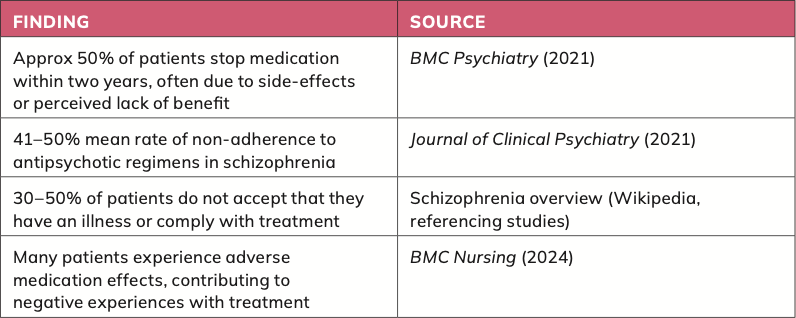
Measures pharmacists can take to improve medication compliance Perceptions of antipsychotic medication among patients with schizophrenia
Several studies provide insights into non-adherence, perceptions of treatment, and patient-reported challenges. There
is no single figure that directly measures the exact percentage of schizophrenia patients who believe their medication is inappropriate or harmful.
Interpretation: While there is no exact percentage for how many patients believe their medication is inappropriate or harmful, evidence suggests that around 30-to-50 per cent of patients experience negative perceptions or discontinue treatment. These views are commonly linked to side-effects, lack of perceived benefit, or limited insight into their condition.
Counselling strategies for patients with schizophrenia who are reluctant to take medication
It can be challenging to change beliefs for a patient with schizophrenia who is hesitant or unwilling to take their prescribed antipsychotic medication. Counselling strategies pharmacists can use include:
- Listen and acknowledge concerns: Validate the patient’s feelings without judgement to build trust.
- Explain benefits simply: Focus on symptom control, relapse prevention, and stability in daily life.
- Be honest about side-effects: Reassure that many are manageable with dose adjustments or alternative options.
- Promote choice and shared decision- making: Discuss medicine options, formulations, and treatment goals together.
- Encourage practical supports and networks: Suggest reminders, pill organisers, long-acting injections, and involving family or carers.
Other pharmacist input to improve compliance
- Medicines reconciliation on admission and discharge, including confirmation of depot due dates, clozapine supply and blood test windows.
- Provide ‘dose due’ cards and missed?dose flowcharts for LAIs (Long?acting injectable); ensure contact numbers for depot clinics are up to date. ? Counsel on red flags for patients prescribed clozapine (severe constipation, abdominal pain, reduced flatus).
- Check for hoarding or stockpiling; assess adherence barriers (beliefs about medicines, side-effects, cognition, chaotic lifestyle).
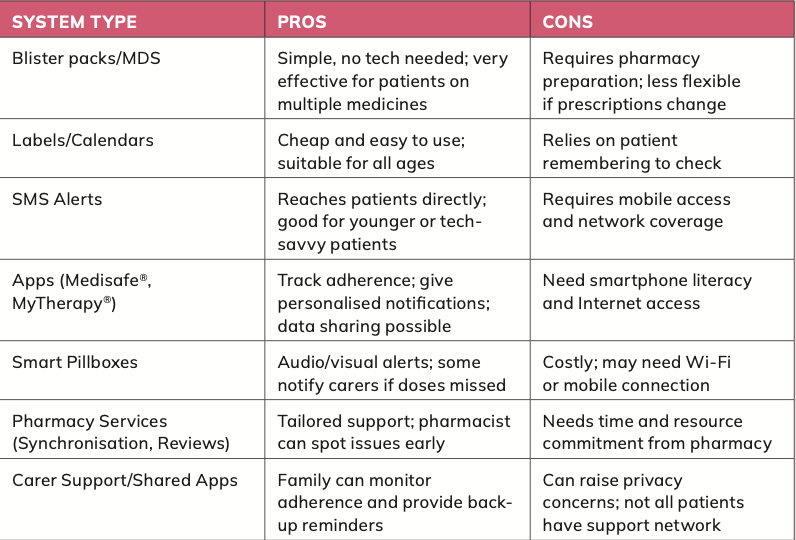
- Reminder systems, including the use of Monitored Dosage Systems (MDS) by pharmacies can increase adherence.
Pharmacy reminder systems to improve medication adherence Pharmacies can support patients with various reminder systems to improve medication adherence. These range from simple low-tech solutions, to advanced digital tools and pharmacy-led services.
1. Traditional tools
- Blister packs/Monitored Dosage Systems (MDS) help organise weekly doses.
- Labels, stickers, or large?print instructions make schedules clearer.
- Printed calendars allow patients to tick off doses.
2. Digital reminders
- SMS alerts remind patients to collect or take medicines.
- Apps send notifications and track use. UK examples include Medisafe, MyTherapy and different countries have different options.
- Smart pillboxes/alarm devices give audio/visual reminders.
- Voice assistants like Amazon Alexa, Google Assistant and Apple Siri can be programmed with prompts can be programmed with prompts.
3. Pharmacy services
- Prescription reminders and synchronisation ensure medicines are refilled on time.
- Medicines Use Reviews identify adherence issues and provide tailored advice.
- Follow-up phone calls after starting new medicines reinforce adherence.
4. Carer support
- Smart devices can notify carers if doses are missed.
- Shared apps let families track adherence together.
Practical counselling points in clinics
Measures clinicians and mental health teams can take to improve compliance:
- Setting expectations: Explain that improvements in sleep, agitation and anxiety may come first; delusional conviction often softens gradually; full response may take several weeks.
- Lifestyle support: Brief diet and activity advice; signpost weight-management and exercise on referral schemes; discuss sleep hygiene.
- Alcohol, smoking and cannabis: Advise on interactions and relapse risk; offer structured support to stop smoking and reduce cannabis use.
- Side-effect self-monitoring: Provide simple checklists for weight, bowel habit (especially on clozapine), movement symptoms, sexual health and menstrual cycles; encourage prompt reporting.
- Missed doses: Agree a written plan for what to do if oral doses or depots are missed; emphasise not to ‘double up’ without advice.
- Travel and time zones: Plan depot appointments in advance; carry a medicines summary and clinic contacts; consider time-zone shifts for dosing of sedating drugs at night.
- Practical steps: By way of example, mental health teams specialising in clozapine administration and patient care in some cases depending on country (eg, offered in the UK) can supply rescue packs for clozapine bowel care as per local guidance.
- Transitions of care: Relapse, self-harm and medicine misadventure tend to cluster around transitions such as post-discharge, after dose/formulation
It can be challenging to change beliefs for a patient with schizophrenia who is hesitant or unwilling to take their prescribed antipsychotic medication
changes, or during travel; therefore extra vigilance and is advised around transition period by more regular monitoring (discussed next paragraph).
European best practice in monitoring high-risk schizophrenia patients in the community
The United Kingdom, Germany, the Netherlands, and Sweden are referenced in this table as they are recognised for having well-financed and structured mental health services by international standards. These systems generally ensure timely access to psychological therapies, strong community-based care, and established crisis intervention pathways. For example, the UK aims to provide early intervention for psychosis within two weeks of referral, while Germany and the Netherlands invest heavily in multidisciplinary community teams, and Sweden is known for its high per- capita funding of psychiatric services and rapid crisis response.
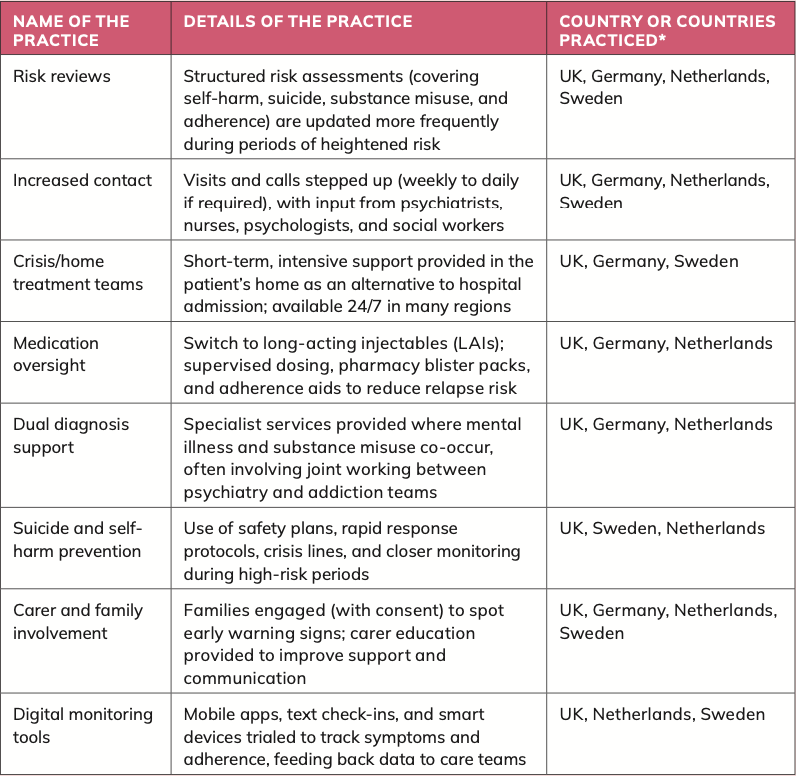
*As practiced in the four reference countries. Other countries also have many of the s ame practices, but this comparison table focuses on these four only
References for Table 3
- NHS England. Implementing the Early Intervention in Psychosis Access and
Waiting Time Standard: Guidance. 2016. - World Health Organization. Mental Health Atlas. 2020.
- German Federal Ministry of Health. Mental Health Care Structures in Germany. Updated 2022.
- Trimbos Institute (Netherlands). Mental Health Care in the Netherlands: Facts and Figures. 2021. ? Swedish National Board of Health and Welfare. Psychiatric Care in Sweden: Annual Report’ 2022.
The practices in Table 3 represent common best-practice approaches across these systems, with overlapping approaches noted in the right-hand column.
Side effects: Recognition and management
Extrapyramidal symptoms (EPSE) encompass acute dystonia (sudden, sustained muscle spasm), Parkinsonism and akathisia (restlessness with an urge to move). Acute dystonia typically occurs within days of initiation or dose escalation, especially with potent D2 antagonists, eg, haloperidol, chlorpromazine, flupentixol, zuclopenthixol, and trifluoperazine; treat promptly with intramuscular or oral anticholinergics and review dose. Parkinsonism presents with bradykinesia, rigidity and tremor; consider dose reduction or switching to a lower-risk drug, eg, quetiapine, olanzapine, aripiprazole (a D2 partial agonist, not a full antagonist) or clozapine. Short-term anticholinergics can help, but increase anticholinergic burden in older adults.
Akathisia is often mislabeled as ‘agitation’. Patients describe inner restlessness, inability to sit still, and motor fidgeting. It is strongly associated with distress and suicidality if unrecognised. First-line options include dose reduction, switching to a lower-risk drug (eg, quetiapine or clozapine), and adding propranolol where not contraindicated.
Tardive dyskinesia (involuntary, repetitive movements) emerges after months or years of exposure and may be persistent. Strategies include minimising total dopamine-blocking burden, switching to clozapine, and considering VMAT2 inhibitors (medicines that reduce abnormal movements by blocking dopamine release) where licensed and available under specialist advice. Regular screening (eg, AIMS, which is the Abnormal Involuntary Movement Scale, used to detect and monitor tardive dyskinesia) helps detect early changes.
Sedation, orthostatic hypotension and anticholinergic effects are common during titration; schedule sedating doses at night where feasible, titrate more slowly, and optimise hydration. Counsel on avoiding sudden postural changes and on driving or operating machinery until stable.
Metabolic effects demand anticipatory counselling: Agree realistic weight?management plans, ensure access to dietetic support where available, and encourage gradual increases in physical activity. Discuss the weight trajectory expected with particular drugs so that early gains trigger timely intervention rather than late crisis management.
Hyperprolactinaemia requires both symptom enquiry and, where indicated, laboratory monitoring. Sexual side?effects and menstrual disturbance are commonly under?reported; pharmacists should ask sensitively and normalise discussion. If switching is not feasible, low?dose aripiprazole augmentation may be considered under specialist oversight. Hyperprolactinaemia symptoms include breast enlargement, galactorrhoea (inappropriate or excessive milk secretion not related to breastfeeding), menstrual changes, sexual dysfunction, and infertility. Risperidone, paliperidone, amisulpride, and high?potency typical (first?generation) antipsychotics like haloperidol have highest risk of hyperprolactinaemia, while aripiprazole, clozapine, and quetiapine are lowest risk.
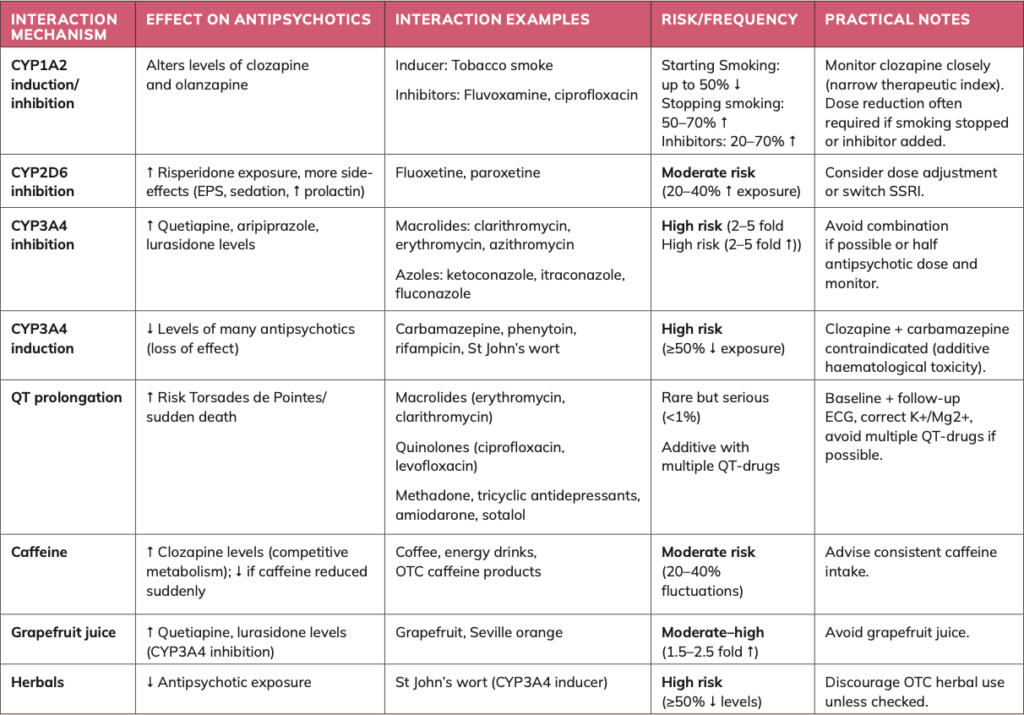
Drug-drug and drug-lifestyle interactions Before I go into specific interaction examples, Clozapine has a higher risk of fatal overdose and a narrower safety margin (has a narrow therapeutic window) compared with most other antipsychotics. This is one of the reasons it is tightly monitored and usually only prescribed when other antipsychotics fail.
CYP1A2: Clozapine and olanzapine are substantially affected by CYP1A2 induction and inhibition. Tobacco smoke (polycyclic aromatic hydrocarbons) induces CYP1A2, lowering levels; abrupt smoking cessation can raise concentrations and toxicity risk, so while smoking cessation is advised, dosage reduction may be needed if someone is prescribed these two drugs, especially for clozapine, as it has a lower therapeutic window than other antipsychotics, so higher risk overdose/ toxicity than antipsychotics if blood level rise. Strong inhibitors (eg, fluvoxamine, ciprofloxacin) can maredly increase clozapine exposure, so seek urgent dose review and monitoring.
CYP2D6 and CYP3A4: Fluoxetine and paroxetine (2D6 inhibitors) can increase risperidone exposure and effects; macrolides and
azoles (3A4 inhibitors) can elevate quetiapine and aripiprazole levels. Carbamazepine (3A4 inducer) lowers many antipsychotic levels and is itself problematic with clozapine (haematological risk).
QT?prolonging combinations: Be cautious combining antipsychotics with macrolides, quinolones, methadone, tricyclics and certain antiarrhythmics; correct electrolytes before and during treatment; obtain baseline and follow?up ECGs based on risk. Avoid multiple QT?prolonging drugs where alternatives exist.
Other interactions: Caffeine can raise clozapine levels; heavy caffeine reduction can lower them — advise consistency. Grapefruit juice inhibits CYP3A4 and can raise quetiapine and lurasidone exposure. St John’s wort induces CYP3A4 and can reduce antipsychotic levels; discourage use. Always reconcile over?the?counter medicines and herbal products.
Measurement-based care and outcomes (for mental health teams/ prescribers)
Patient?reported outcome measures: Use simple, repeatable metrics to make shared decisions. Alongside clinical judgement, track patient?reported outcomes such as sleep duration and quality, daily distress ratings, voice intensity/frequency diaries, and functioning markers (attendance at work or education, self?care tasks).
Physical and treatment monitoring: Document objective measures at each review: Weight, waist, BP, and, when due, laboratory results. For LAIs (Long?acting injectables) track on?time administration rates and missed?dose recovery.
Access to psychotherapy (NICE QS80 Standard): For psychotherapy access, mental health teams should record referral dates and waiting times to help services evidence gaps against NICE quality standard QS80. The NICE Quality Standard on psychosis and schizophrenia in adults (QS80) advises everyone with psychosis or schizophrenia should be offered cognitive behavioural therapy (CBT) and family intervention as part of their care. So, recording dates and waiting times shows if this standard is being met and helps mental health teams measure performance. Planning staffing levels as meeting the standard in QS80 means prompt access to psychotherapy services, which results in better patient outcomes.
On a more macro level, QS80 allows health authorities and services to assess if they are meeting the goal of rapid access to psychotherapy services and as an example, determine regional areas that do not have sufficient psychotherapy services/ providers, and plan psychotherapy service levels based on accurate data from mental health teams.
Treatment response and adjustment rules: Agree early stopping?rules and change criteria. For example, no meaningful improvement by week four?to?six despite adherence may trigger a dose optimisation or switch discussion; persistent negative symptoms and cognitive difficulties may prompt consideration of psychosocial and occupational supports.
Common pitfalls and how to avoid them
Delaying clozapine: Protracted trials at subtherapeutic doses or repeated same?class switches can postpone clozapine for years, worsening outcomes. Confirm adequacy of past trials and move to clozapine once Treatment?Resistant Schizophrenia (TRS) is established.
Under?treating constipation on clozapine: Provide a preventative bowel regimen from day one and educate about red flags. Build bowel charts into clinic templates.
Ignoring prolactin: High prolactin side?effects are easy to miss because patients can be reluctant or too embarrassed to inform health professionals. This is because high prolactin side?effects include loss of sex drive, sexual dysfunction, irregular or absent periods, and breast enlargement or milk leakage can be embarrassing for patients to admit or discuss. Asking regularly but in a gentle, understanding and compassionate manner will help ensure patients are more likely to open up about prolactin-related problems.
This allows an opportunity to adjust treatment if needed, which can hugely improve comfort and adherence.
Failure to plan transitions: Depot windows, clozapine bloods and travel require planning. Provide written schedules and contacts.
No ECG strategy: Identify QTc risks early and obtain baseline ECGs when indicated, instead of reacting after adverse events.
Overlooking substance use: Enquire non-judgmentally about tobacco, cannabis, alcohol and other substances at every review and offer evidence-based support.
Psychological therapies and family work: Making it real for pharmacy Pharmacy teams can champion access to CBTp (CBT for psychosis) and family interventions by asking their patients living with schizophrenia: ‘Have you been offered talking therapies for your condition, and would you like help getting a referral?’ in cases where the pharmacist knows or can observe psychosis is or is likely an issue. Keep local directories of providers and waiting-time information.
Where psychological services are scarce, pharmacists can offer brief skills-based support; for example, advice on good sleep habits (‘sleep hygiene’), encouraging patients to build small enjoyable or routine activities into their day (‘basic behavioural activation’), and helping them break down challenges into manageable steps (‘problem-solving’) while they wait for formal therapy.
Family and carers often collect medicines and can be invaluable partners (with consent). Provide concise information on early warning signs that the illness may be worsening (‘relapse signatures’), making sure they know where to get immediate help if they feel unsafe (‘crisis lines’) and medicine side-effects, and invite them to share observations between appointments or medication collection dates.
Perinatal considerations
Psychosis relapse in pregnancy or postpartum can be devastating. Most antipsychotics have reassuring, but not risk-free, data in pregnancy; however, risks differ by drug. There may be increased rates of gestational diabetes and large-for-gestational-age infants with some atypicals. Management decisions should be individualised in specialist perinatal services with shared decision-making, documentation of risks/benefits, and plans for neonatal observation where appropriate.
Avoid abrupt discontinuation. Plan for breastfeeding compatibility on a case-by-case basis, monitoring for infant sedation or feeding difficulties where relevant. Liaise early with obstetric, midwifery and health-visiting teams.
Suicide risk and safeguarding
Suicide risk peaks in the early years after diagnosis and around service transitions. Warning signs include escalating command hallucinations, hopelessness, new agitation or akathisia (restlessness with an urge to move), stockpiling of medicines and sudden disengagement. Pharmacy teams should be aware and alert to these signs and alert the appropriate person depending on the situation, eg, the patient’s mental health team, GP, carer or family member (where the pharmacist has consent and/or has a good relationship and rapport with family member(s) of the patient).
Where there are safeguarding issues such as financial exploitation, domestic abuse, or self-neglect, follow local policies and involve the multidisciplinary team promptly. Crisis and out-of-hours numbers
Suicide risk peaks in the early years after diagnosis and around service transitions
should be printed on care plans and medicine summaries.
Two sample care scenarios
Sample case A
Early LAI (Long-acting injectables) to stabilise care: A 22-year-old man with first?episode psychosis (FEP) begins oral risperidone with good symptom control but struggles with daily adherence amid chaotic sleep and cannabis use. After shared decision-making, he switches to an LAI with a clear loading plan and a concurrent smoking-cessation programme. Over six months, he maintains attendance at college and avoids relapse; BMI and prolactin are monitored with planned review.
Sample case B
Clozapine bowel-care bundle: A 38-year-old woman with Treatment- Resistant Schizophrenia (TRS) starts clozapine after two adequate trials. Baseline bowel assessment is recorded; she receives a written constipation action plan and a rescue laxative pack. At week three she reports reduced bowel frequency; laxatives are intensified and hydration reinforced, averting admission. CRP/ troponin monitoring in week two- three is unremarkable; she reports steady symptom improvement. Note: CRP/troponin monitoring means checking blood levels of C-reactive protein (inflammation marker) and troponin (heart damage marker) to detect infection, inflammation, or cardiac injury. CRP and troponin monitoring with clozapine are needed to detect early signs of myocarditis or cardiotoxicity, rare but serious side- effects of the drug.
Key takeaways for practice
- NICE anchors: Use CG178 and QS80 to structure local care; ensure CBTp (CBT for psychosis), family
work and physical?health checks are routinely offered. - Medicines: Individualise antipsychotic choice; review early; consider LAIs (long?acting injectables) early; initiate clozapine promptly once treatment? resistant schizophrenia is established, and manage constipation/myocarditis risks proactively.
- Physical health: Baseline, 12?week and annual checks as a minimum. Act on results.
- Collaboration: Involve carers, primary care and community pharmacy; smooth transitions and prevent gaps
in clozapine and depot supply. - Recovery: Align care to the person’s goals for living, learning and working; tackle tobacco, obesity and inactivity as treatment priorities, not optional extras.
References on request
Written by Eamonn Brady MPSI (Pharmacist). Whelehans Pharmacies, 38 Pearse St and Clonmore, Mullingar. Tel 04493 34591 (Pearse St) or 04493 10266 (Clonmore). www.whelehans. ie. Email ebrady@whelehans.ie