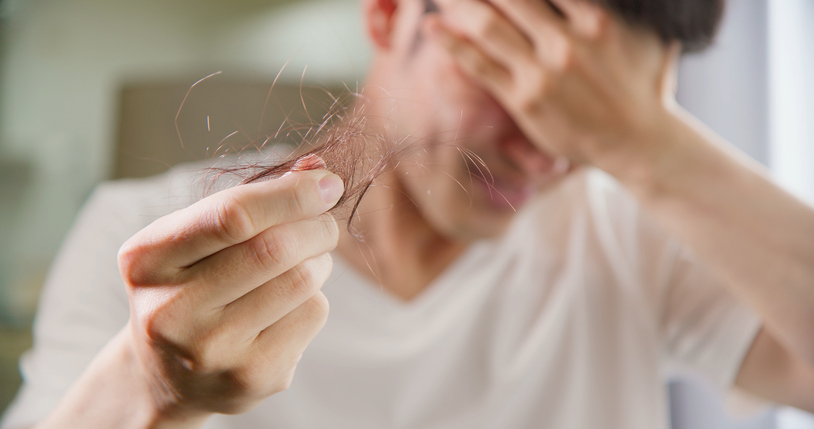
This module discusses the hair growth cycle and male hair pattern loss. On completion of this module, it is expected the reader will have an enhanced understanding of differential diagnosis of hair loss in men, the role of the pharmacist, and potential treatments, including new and emerging therapies.
Part 1: The Normal Hair Growth Cycle
Understanding the normal hair growth cycle is essential to appreciating why androgenetic alopecia (male pattern hair loss) develops and why currently available treatments require prolonged use before any benefit becomes apparent. Hair is composed primarily of keratin, a fibrous structural protein produced within the hair follicle. The hair follicle is a highly active mini-organ that undergoes continuous cycles of growth, regression, and rest throughout life.
Hair growth occurs in three distinct phases. The anagen phase is the active growth phase and normally lasts between two and seven years in scalp hair. Approximately 85-to-90 per cent of scalp hairs are in anagen at any one time. The duration of anagen largely determines maximum hair length. This is followed by the catagen phase, a brief transitional period lasting approximately two-to-three weeks, during which the lower portion of the follicle regresses and hair production ceases. Finally, the follicle enters the telogen phase, a resting stage lasting around two-to-four months. At the end of telogen, the hair shaft is shed (the exogen phase), and a new anagen hair begins to develop from the same follicle. Shedding approximately 50-to-100 hairs daily is therefore considered entirely physiological.
How Male Pattern Hair Loss Develops
Male pattern hair loss results not from destruction of hair follicles, but from progressive follicular miniaturisation. In genetically susceptible men, terminal hair follicles gradually become smaller, producing progressively shorter, finer, and less pigmented hairs until many follicles eventually produce only barely visible vellus hairs. Importantly, the follicles remain viable for many years, explaining why pharmacological treatment can restore hair growth in some patients if initiated before irreversible follicular loss occurs.
The Role of Dihydrotestosterone (DHT)
The principal androgen involved is dihydrotestosterone (DHT). Testosterone is converted to DHT by the enzyme 5-alpha-reductase, particularly the type II isoenzyme located within hair follicles and the prostate. DHT binds androgen receptors in genetically susceptible follicles with considerably greater affinity than testosterone. This interaction shortens the duration of the anagen phase while prolonging the interval before new hair growth begins. With successive hair cycles, follicles become progressively smaller and individual hairs become thinner, leading to the characteristic gradual reduction in hair density.
The Importance of Genetics
Genetics plays a central role in androgenetic alopecia. Rather than following a simple Mendelian inheritance pattern, susceptibility is polygenic, involving multiple genetic loci, including variants affecting androgen receptor signalling and other pathways regulating follicular biology. A positive family history significantly increases risk, although the condition may occur in men without an obvious familial pattern.
Clinical Presentation and Progression
Clinically, androgenetic alopecia usually begins with bitemporal recession, thinning at the frontal scalp, or loss of hair density at the vertex. These changes may occur independently or simultaneously before gradually progressing. The Hamilton-Norwood classification remains the standard method for describing disease severity and progression in clinical practice and research.
Part 2: How Common Is Male Pattern Hair Loss?
Male pattern hair loss, also known as androgenetic alopecia, is the commonest cause of hair loss in men and one of the most frequent conditions encountered in primary care and community pharmacy. Although it is not medically serious, it can have a profound impact on self-esteem, body image, and quality of life. Pharmacists are often the first healthcare professionals approached by men seeking advice, making an understanding of its prevalence and clinical significance essential.
Prevalence and Age of Onset
Androgenetic alopecia affects men of all ethnicities, although prevalence varies between populations. It can begin in late adolescence or early adulthood, with incidence increasing steadily with age. Approximately 30 per cent of men show clinically significant hair loss by 30 years of age, around 50 per cent by the age of 50, and up to 80 per cent by 70 years. The age of onset is strongly influenced by genetic susceptibility, with men who develop hair loss at a younger age more likely to experience progressive disease.
Androgenetic alopecia affects men of all ethnicities, although prevalence varies between populations
Recognising the Typical Pattern
The characteristic pattern usually starts with bitemporal recession and thinning over the vertex before gradually progressing. The Hamilton-Norwood classification is widely used to stage disease severity and monitor progression over time. Recognising these patterns helps distinguish androgenetic alopecia from other causes of hair loss, such as alopecia areata, telogen effluvium and scarring alopecias, all of which require different management.
Psychological Impact
Although male pattern hair loss has no serious physical consequences, its psychological impact can be considerable. It is associated with reduced self-confidence, anxiety and impaired quality of life, particularly in younger men and those with progressive hair loss.
Part 3: Assessment in the Pharmacy
Community pharmacists are often the first healthcare professionals consulted by men concerned about hair loss. A structured assessment helps distinguish androgenetic alopecia from other causes, identify patients requiring referral, and ensure evidence-based treatment is initiated appropriately. Early intervention is important because treatments are generally most effective before extensive follicular miniaturisation occurs.
Taking a Patient History
A thorough history should establish when hair loss began, whether it developed gradually or suddenly, and whether there has been progression over time. Men with androgenetic alopecia usually describe slowly progressive thinning over months or years, beginning at the temples, frontal scalp, or vertex. Sudden diffuse shedding or patchy hair loss suggests an alternative diagnosis such as telogen effluvium or alopecia areata.
Reviewing Medicines and Potential Causes
The pharmacist should ask about a family history of male pattern hair loss, as this substantially increases the likelihood of androgenetic alopecia. Current and recent medicines should also be reviewed, including retinoids, anticoagulants, beta-blockers, antiepileptics, chemotherapy, and other medicines associated with hair loss. Recent illness, surgery, significant psychological stress, rapid weight loss, or nutritional deficiencies may indicate telogen effluvium rather than androgenetic alopecia.
Scalp Examination and Red Flags
Examination should focus on the distribution of hair loss and the condition of the scalp. Typical male pattern hair loss presents with preserved frontal hairline recession and vertex thinning without inflammation or scarring. Red flag findings include scarring, marked scalp inflammation, pustules, scaling suggestive of fungal infection, rapidly progressive hair loss, loss of eyebrows or body hair, or associated systemic symptoms. These require referral to a GP or dermatologist.
Managing Patient Expectations
Treatment expectations are discussed in detail in Part 6.
When to Refer
Referral is appropriate where the diagnosis is uncertain, hair loss is rapid or atypical, scarring alopecia is suspected, there are features of an underlying medical condition, or first-line treatment fails despite good adherence.
Part 4: Differential Diagnosis of Hair Loss in Men
Androgenetic alopecia is the commonest cause of hair loss in men, but it should not automatically be assumed to be the diagnosis in every patient. A careful history and examination help distinguish male pattern hair loss from other conditions that may require investigation or urgent referral.
Androgenetic Alopecia Versus Alopecia Areata
Androgenetic alopecia typically presents with gradual thinning over the frontal scalp, temples and vertex while preserving a characteristic pattern. The scalp appears healthy, with no inflammation, scaling, or scarring. In contrast, alopecia areata presents with sudden, well-defined patches of complete hair loss. ‘Exclamation-mark’ hairs may be visible at the edge of lesions, and some patients have nail pitting or a personal or family history of autoimmune disease.
Telogen Effluvium
Telogen effluvium usually causes diffuse shedding rather than patterned thinning. Patients often report excessive hair coming out during washing or brushing approximately two-to-four months after a significant trigger such as major illness, surgery, rapid weight loss, severe psychological stress, or certain medicines. Unlike androgenetic alopecia, the hairline is usually preserved, and the condition is often reversible once the underlying cause is addressed.
Scalp Disorders and Scarring Alopecias
Scalp disorders should also be considered. Tinea capitis may present with scaling, broken hairs, inflammation, and occasionally painful swellings (kerions). Although more common in children, it can occur in adults and requires prompt oral antifungal treatment. Scarring alopecias, including lichen planopilaris and frontal fibrosing alopecia, are less common but represent dermatological emergencies because permanent follicular destruction may occur if treatment is delayed.
Other Causes of Hair Loss
Other important causes include traction alopecia, trichotillomania, endocrine disorders such as thyroid disease, nutritional deficiencies, including iron deficiency, and systemic illnesses such as lupus. Medicines including chemotherapy, retinoids, anticoagulants and some antiepileptics may also contribute to hair loss.
When to Refer
Referral should be arranged when hair loss is sudden, rapidly progressive, associated with scalp inflammation or scarring, accompanied by systemic symptoms, or when the diagnosis remains uncertain. Recognising these alternative causes ensures that patients receive appropriate treatment while avoiding delays that could result in irreversible hair loss.
Part 5: Investigations and Referral
Most men presenting with gradual, typical male pattern hair loss do not require laboratory investigations before treatment. The diagnosis of androgenetic alopecia is usually made clinically from the characteristic pattern of hair loss, medical history, and scalp examination.
When Are Investigations Needed?
Blood tests are not routinely recommended for typical androgenetic alopecia but may be appropriate when hair loss is diffuse, sudden, rapidly progressive or accompanied by symptoms suggesting an underlying medical condition. Depending on the clinical presentation, investigations may include a full blood count, ferritin, thyroid function tests, vitamin B12, folate and vitamin D levels. Additional investigations may be required if autoimmune disease, endocrine disorders, or other systemic illnesses are suspected.
When Should Patients Be Referred?
Referral is particularly important when hair loss is associated with scalp inflammation, scaling, pustules, scarring, or pain, as these features may indicate inflammatory or infectious scalp disorders requiring urgent treatment. Patients with patchy hair loss suggestive of alopecia areata, suspected tinea capitis, scarring alopecias or unexplained eyebrow and body hair loss should also be referred for specialist assessment.
Specialist Assessment
Men who develop hair loss following chemotherapy or other specialist medicines should normally be managed by the treating medical team. Likewise, patients with significant psychological distress related to hair loss may benefit from medical assessment, as anxiety, depression and reduced quality of life are common in individuals with androgenetic alopecia.
Dermatologists may perform additional assessments where the diagnosis remains uncertain. These include dermoscopy (trichoscopy), hair-pull testing, scalp biopsy in selected cases, and more specialised investigations where uncommon causes of alopecia are suspected. These investigations help differentiate androgenetic alopecia from inflammatory, autoimmune, and scarring conditions.
Part 6: Evidence-Based Treatment of Male Pattern Hair Loss
Treatment of androgenetic alopecia aims to slow further hair loss, preserve existing hair and stimulate regrowth where viable hair follicles remain. No currently licensed treatment permanently cures male pattern hair loss, and patients should be counselled that continuous long-term treatment is required to maintain any benefit.
Treatment Goals
Early intervention offers the greatest chance of success because advanced follicular miniaturisation is less likely to respond to treatment.
Topical Minoxidil
Topical minoxidil remains the only non-prescription medicine licensed for male pattern hair loss in Ireland. Although its exact mechanism is not fully understood, minoxidil prolongs the anagen (growth) phase, increases follicular size, and may improve blood flow around hair follicles. The 5% formulation is generally recommended for men and is applied directly to the affected scalp once or twice daily, depending on the product. Patients should be advised that increased shedding may occur during the first few weeks as resting hairs are replaced by new growing hairs. This is usually temporary and should not prompt discontinuation.
Meaningful improvement with topical minoxidil is rarely seen before three-to-six months, while maximal benefit often requires 12 months of continuous treatment. If treatment is stopped, newly preserved or regrown hair is gradually lost over several months. Common adverse effects include scalp irritation, itching, dryness, and contact dermatitis, while unwanted facial hair may occasionally occur due to accidental transfer.
Oral Finasteride
Oral finasteride 1mg daily is a prescription-only treatment and is considered one of the most effective pharmacological options for men with androgenetic alopecia. Finasteride selectively inhibits type II 5-alpha-reductase, reducing scalp and serum dihydrotestosterone (DHT) concentrations and slowing follicular miniaturisation. Clinical trials have consistently demonstrated reduced hair loss and increased hair counts in many men, particularly when treatment is started early.
Patients prescribed finasteride should be counselled regarding potential adverse effects, including reduced libido, erectile dysfunction, ejaculatory disorders, and breast tenderness, although these occur in a minority of patients. Reports of persistent sexual symptoms and mood changes have received considerable attention in recent years, and patients should be encouraged to discuss any concerns promptly with their prescriber rather than stopping treatment without advice.
Dutasteride
Dutasteride inhibits both type I and type II 5-alpha-reductase and suppresses DHT more extensively than finasteride. Although not licensed for androgenetic alopecia in Ireland, it may occasionally be prescribed off-label by dermatologists or hair specialists for selected patients who fail to respond adequately to finasteride. Patients should understand that evidence suggests greater efficacy but potentially a higher incidence of adverse effects.
Combination Therapy
Combination therapy with topical minoxidil and oral finasteride generally provides greater benefit than either treatment alone because the medicines act through different mechanisms. Good adherence is essential, and pharmacists play an important role in reinforcing realistic expectations, identifying adverse effects, and encouraging continued treatment where appropriate.
Hair Transplantation
Hair transplantation may be considered for carefully selected patients with stable disease who have insufficient benefit from medical therapy. Modern follicular unit transplantation techniques can provide excellent cosmetic outcomes but require careful patient selection and should complement rather than replace medical treatment, as ongoing hair loss in untreated follicles may continue after surgery.
Part 7: Emerging and Specialist Treatments
Combination therapy with topical minoxidil and oral finasteride generally provides greater benefit than either treatment alone because the medicines act through different mechanisms. Good adherence and realistic treatment expectations are essential to maximise long-term treatment outcomes.
Low-Dose Oral Minoxidil
Low-dose oral minoxidil has gained considerable interest in recent years. Although not licensed for androgenetic alopecia in Ireland, dermatologists increasingly prescribe low doses off-label for selected patients who cannot tolerate or fail to respond adequately to topical therapy. Studies suggest improvements in hair density and thickness, but adverse effects including hypertrichosis (abnormal/excessive hair growth), ankle oedema, tachycardia, and postural hypotension require careful patient selection and medical supervision.
Platelet-Rich Plasma (PRP) Therapy
Platelet-rich plasma (PRP) therapy involves injecting concentrated platelets prepared from the patient’s own blood into the scalp. Growth factors released from platelets are thought to stimulate hair follicles and prolong the anagen phase. Meta-analyses suggest PRP may improve hair density in some patients, particularly when combined with conventional medical therapy, but treatment protocols remain inconsistent and repeated sessions are usually required.
Growth factors released from platelets are thought to stimulate hair follicles and prolong the anagen phase
Microneedling
Microneedling has also attracted attention as an adjunctive treatment. Controlled micro-injury to the scalp may stimulate growth factor release and improve penetration of topical minoxidil. Clinical trials suggest combination therapy may produce greater improvements than minoxidil alone, although larger long-term studies are still needed.
Low-Level Laser Therapy
Low-level laser therapy (LLLT) uses red-light wavelengths to stimulate follicular activity. Several home-use devices are commercially available, and some studies demonstrate modest improvements in hair density. However, treatment requires excellent adherence over many months, devices can be expensive, and the magnitude of benefit varies between individuals.
Hair Transplantation
Hair transplantation remains the most effective option for restoring hair in appropriately selected patients with stable androgenetic alopecia. Modern follicular unit extraction (FUE) and follicular unit transplantation (FUT) techniques can achieve highly natural cosmetic results. Patients should be advised that surgery does not halt progression of androgenetic alopecia and ongoing medical treatment is often recommended to preserve existing non-transplanted hair.
Part 8: Supplements and Complementary Therapies
Supplements and complementary products are heavily marketed for hair loss, and men frequently ask pharmacists whether vitamins, minerals or herbal products can reverse thinning hair. While nutritional deficiency can contribute to hair shedding, androgenetic alopecia is primarily driven by genetic susceptibility and androgen-mediated follicular miniaturisation. In most otherwise healthy men, supplements do not address the underlying mechanism of male pattern hair loss.
Biotin
Biotin is one of the most commonly promoted ingredients in hair, skin, and nail supplements. True biotin deficiency is rare and usually occurs in specific circumstances such as inherited metabolic disorders, prolonged parenteral nutrition, significant malabsorption, or chronic use of certain medicines. There is little evidence that biotin improves male pattern hair loss in men who are not deficient. High-dose biotin may also interfere with some laboratory immunoassays, including thyroid and cardiac marker tests, so patients should inform healthcare professionals if they are taking it.
Iron and Other Nutritional Deficiencies
Iron deficiency can cause diffuse hair shedding, particularly telogen effluvium, but routine iron supplementation is not appropriate unless deficiency has been identified. Men with suspected iron deficiency should be referred for medical assessment because unexplained iron deficiency in men may indicate gastrointestinal blood loss or another underlying condition. Similarly, vitamin D, vitamin B12, folate and zinc should generally be replaced only where deficiency is suspected or confirmed.
Zinc
Zinc has been studied in several forms of hair loss, but evidence for benefit in androgenetic alopecia is limited. Excessive zinc intake can cause gastrointestinal upset and, with prolonged high-dose use, copper deficiency, and neurological complications. Pharmacists should advise against long-term high-dose mineral supplementation unless clinically indicated.
Zinc has been studied in several forms of hair loss, but evidence for benefit in androgenetic alopecia is limited
Saw Palmetto
Saw palmetto is promoted as a natural anti-androgen because it may weakly inhibit 5-alpha-reductase. Small studies suggest possible modest benefit, but the evidence is far weaker than for licensed treatments such as topical minoxidil or prescribed finasteride. Patients should also be reminded that natural products can still cause adverse effects and drug interactions.
Other Complementary Therapies
Marine protein supplements, collagen products, caffeine shampoos, essential oils, and other cosmetic preparations are widely advertised for hair growth. Some may improve the feel or appearance of hair, but evidence that they meaningfully reverse androgenetic alopecia is limited. Patients should be wary of products claiming rapid regrowth, permanent cures or results comparable to prescription treatments without robust clinical trial evidence.
Part 9: The Pharmacist’s Role
Community pharmacists are frequently the first healthcare professionals consulted by men who notice thinning hair or early signs of hair loss. As one of the most accessible healthcare professionals, pharmacists have a pivotal role in the early recognition of androgenetic alopecia, distinguishing it from other causes of hair loss, providing evidence-based advice, and ensuring timely referral where appropriate. Early intervention is particularly important because currently available treatments are most effective before significant follicular miniaturisation occurs.
Initial Assessment
Pharmacists should establish when the hair loss begins, whether it develops gradually or suddenly, and whether it is continuing to progress. Typical androgenetic alopecia develops gradually over months or years, whereas sudden diffuse hair shedding or patchy hair loss may suggest alternative diagnoses such as telogen effluvium or alopecia areata.
A medication history should also be undertaken, as several medicines may contribute to hair loss. Recent illness, surgery, significant emotional stress, rapid weight loss, restrictive dieting, and chronic medical conditions should also be explored, as these factors may point towards causes other than male pattern hair loss.
Recognising Red Flags
While many men presenting to the pharmacy have uncomplicated androgenetic alopecia, pharmacists should remain vigilant for features requiring medical assessment. These include rapid onset hair loss, patchy areas of complete hair loss, scalp inflammation, scaling, pustules, scarring, pain or tenderness, loss of eyebrows or body hair, or symptoms suggestive of an underlying systemic illness. Such findings warrant referral to a GP or dermatologist for further investigation.
Pharmacists should also advise referral where the diagnosis is uncertain, hair loss develops at an unusually young age, first-line treatment has failed despite good adherence, or significant psychological distress is evident.
Recommending Evidence-Based Treatment
Community pharmacists play an important role in ensuring patients receive treatments supported by good-quality clinical evidence. For suitable patients, topical minoxidil remains the only non-prescription medicine licensed for male pattern hair loss in Ireland. Pharmacists should explain how to apply the product correctly, emphasise the importance of applying it only to the affected scalp, and advise patients to wash their hands after application to minimise accidental transfer.
Patients should be informed that increased hair shedding may occur during the first few weeks of treatment as hairs cycle into a new growth phase. This temporary shedding should not normally be interpreted as treatment failure.
Managing Expectations and Improving Adherence
One of the commonest reasons for treatment failure is unrealistic expectations. Many patients expect visible improvement within a few weeks and discontinue treatment prematurely when this does not occur. Pharmacists should explain that meaningful improvement usually requires at least three-to-six months of continuous treatment, with maximal benefit often taking up to 12 months.
Equally important is explaining that neither topical minoxidil nor oral finasteride cures androgenetic alopecia. These treatments slow progression, preserve existing hair and may stimulate regrowth while treatment continues. If treatment is discontinued, any benefit is usually lost gradually over several months.
True/False
Q1. Approximately 85-to-90 per cent of scalp hairs are normally in the anagen (active growth) phase at any one time.
True / False
Q2. Male pattern hair loss occurs because hair follicles are permanently destroyed early in the disease process.
True / False
Q3. Topical minoxidil is the only non-prescription medicine licensed for male pattern hair loss in Ireland.
True / False
Q4. Patients using topical minoxidil should expect meaningful improvement within two-to-four weeks of starting treatment.
True / False
Q5. Oral finasteride works by inhibiting type II 5-alpha-reductase, thereby reducing dihydrotestosterone (DHT) levels.
True / False
Q6. Sudden patchy hair loss with complete bald patches is the typical presentation of androgenetic alopecia.
True / False
Q7. Routine blood tests are recommended for every man presenting with typical male pattern hair loss.
True / False
Q8. Combination therapy with topical minoxidil and oral finasteride generally provides greater benefit than either treatment alone.
True / False
Q9. High-dose biotin supplementation has been proven to improve androgenetic alopecia in otherwise healthy men without biotin deficiency.
True / False
Q10. Patients should be referred if hair loss is associated with scarring, scalp inflammation, or rapid progression.
True / False
Counselling on Prescribed Therapies
Many patients attending community pharmacies will also be prescribed oral finasteride by their GP or dermatologist. Pharmacists should reinforce appropriate counselling regarding expected benefits, the importance of adherence, and potential adverse effects. Sexual dysfunction, breast tenderness, and mood changes should be discussed in a balanced manner, ensuring patients are aware that these adverse effects occur in a minority of users while encouraging them to seek medical advice if concerns arise.
Where patients enquire about dutasteride or low-dose oral minoxidil, pharmacists should explain that these treatments may be prescribed off-label by specialists in selected cases and are not appropriate for routine self-medication.
Advising on Supplements and Complementary Therapies
Hair loss is associated with a substantial commercial market, hence pharmacists are frequently asked about vitamins, minerals, herbal preparations, and cosmetic products. Patients should be advised that while correction of genuine nutritional deficiencies is important, most supplements have little convincing evidence of benefit in otherwise healthy men with androgenetic alopecia. Pharmacists can therefore help patients avoid unnecessary expenditure on products making exaggerated or unsupported claims.
Lifestyle Advice
Although lifestyle changes cannot reverse genetically determined androgenetic alopecia, pharmacists should encourage measures that support overall scalp and hair health. These include maintaining a balanced diet with adequate protein and essential micronutrients, avoiding crash-dieting, managing chronic illness effectively, and stopping smoking where appropriate. Good general health may optimise normal hair growth even though it does not alter the underlying genetic process.
Supporting Psychological Wellbeing
Hair loss can have a considerable psychological impact, particularly in younger men. Reduced confidence, anxiety, social withdrawal, and impaired quality of life are common and should not be underestimated. Pharmacists should approach consultations sensitively, acknowledge patients’ concerns, and provide reassurance that effective evidence-based treatments are available for many individuals.
MCQs
Q1. Which phase of the normal hair growth cycle is the active growth phase?
A. Catagen.
B. Telogen.
C. Anagen.
D. Exogen.
Q2. Oral finasteride treats androgenetic alopecia primarily by:
A. Increasing scalp blood flow.
B. Stimulating collagen production.
C. Blocking androgen receptors directly.
D. Inhibiting type II 5-alpha-reductase and reducing DHT production.
Q3. Which of the following is the only non-prescription medicine licensed for male pattern hair loss in Ireland?
A. Oral finasteride.
B. Dutasteride.
C. Topical minoxidil.
D. Low-dose oral minoxidil.
Q4. Which of the following findings should prompt referral for further medical assessment?
A. Gradual bitemporal recession over several years.
B. Mild thinning at the vertex.
C. Family history of male pattern hair loss.
D. Scalp scarring with rapidly progressive hair loss.
Q5. Which statement regarding supplements for male pattern hair loss is correct?
A. Biotin is effective for most men with androgenetic alopecia.
B. Routine iron supplementation is recommended for all men with hair loss.
C. Supplements should generally only be recommended when a nutritional deficiency is suspected or confirmed.
D. Saw palmetto has stronger evidence than finasteride.
Part 10: Future Directions
Research into androgenetic alopecia is advancing rapidly, with several novel therapies under investigation. Although topical minoxidil and oral finasteride remain the cornerstone of treatment, a better understanding of hair follicle biology is leading to new approaches aimed at improving efficacy, reducing adverse effects, and potentially reversing follicular miniaturisation more effectively.
New Topical Anti-Androgen Therapies
Selective androgen receptor modulation and newer topical anti-androgen therapies are among the most promising developments. Topical formulations seek to reduce scalp dihydrotestosterone while minimising systemic exposure and associated adverse effects. Several investigational agents have demonstrated encouraging early trial results, although further long-term safety and efficacy data are required before widespread clinical use.
Cell-Based and Regenerative Therapies
Cell-based and regenerative therapies are also attracting considerable interest. Researchers are exploring stem-cell-derived treatments, exosomes and other regenerative technologies designed to stimulate dormant follicles and enhance hair growth. While these approaches remain largely experimental, they represent an exciting area of ongoing dermatology research.
Artificial Intelligence and Digital Monitoring
Artificial intelligence and digital imaging are increasingly being used to monitor treatment response objectively. Smartphone applications, trichoscopy and image-analysis software may improve follow-up by allowing clinicians to quantify hair density and progression more accurately than visual assessment alone.
Gene-Targeted Therapies
Gene-targeted therapies may eventually allow treatment to be tailored according to an individual’s genetic susceptibility. Although personalised medicine for androgenetic alopecia is not yet part of routine practice, advances in genomics continue to improve understanding of the molecular pathways involved in follicular miniaturisation and treatment response.
Written by Eamonn Brady (MPSI). Whelehans Pharmacies, 38 Pearse St and Clonmore, Mullingar. Tel 04493 34591 (Pearse St) or 04493 10266 (Clonmore). www.whelehans.ie
COMPLETE THIS MODULE ONLINE
You can check your answers to the T/F and MCQ questions on PharmacistCPD.ie.
Successful completion of this module will earn you 2 CPD points.
References
- Almohanna HM, Ahmed, AA, Tsatalis JP, and Tosti A (2019). ‘The role of vitamins and minerals in hair loss: A review’, Dermatology and Therapy, 9(1), pp. 51-70.
- American Academy of Dermatology Association (2024). Hair loss: Diagnosis and treatment. Available at: https://www.aad.org.
- Asfour L, and Cranwell W (2023). ‘Platelet-rich plasma for androgenetic alopecia: An updated systematic review’, Journal of Cosmetic Dermatology, 22(5), pp. 1548-1558.
- Badri T, and Alikhan A (2024). ‘Androgenetic alopecia’, StatPearls. Treasure Island, FL: StatPearls Publishing.
- British Association of Dermatologists (2022). Patient Information Leaflet: Male Pattern Hair Loss. London: BAD.
- Cranwell W, and Sinclair R (2016). ‘Male androgenetic alopecia’, BMJ, 355, i5610.
- European Academy of Dermatology and Venereology (2024) Guidelines for the management of androgenetic alopecia. Brussels: EADV.
- Gupta AK, Bamimore MA, and Foley KA (2022). ‘Network meta-analysis of treatments for androgenetic alopecia’, Journal of Dermatological Treatment, 33(7), pp. 3401-3412.
- Gupta AK, and Charrette A (2015). ‘The efficacy and safety of 5-alpha-reductase inhibitors in androgenetic alopecia: A network meta-analysis and benefit-risk assessment’, Journal of Dermatological Treatment, 26(2), pp. 156-161.
- Gupta AK, Mays RR and Versteeg SG (2018). ‘Efficacy of minoxidil for androgenetic alopecia: A systematic review and meta-analysis’, Journal of Dermatological Treatment, 29(4), pp. 366-379.
- Hamilton JB (1951). ‘Patterned loss of hair in man: Types and incidence’, Annals of the New York Academy of Sciences, 53(3), pp. 708-728.
- Ho CH, Sood T, and Zito PM (2024). ‘Telogen effluvium’, StatPearls. Treasure Island, FL: StatPearls Publishing.
- Messenger AG, and Sinclair RD (2006). ‘Follicular miniaturisation in female pattern hair loss: Clinicopathological correlations’, British Journal of Dermatology, 155(5), pp. 926-930.
- Messenger AG, and McKillop J (2019). ‘Hair loss’, Medicine, 47(6), pp. 386-395.
- Mounsey AL, and Reed SW (2009). ‘Diagnosing and treating hair loss’, American Family Physician, 80(4), pp. 356-362.
- National Institute for Health and Care Excellence (2023). Clinical Knowledge Summaries: Hair loss – male pattern hair loss. London: NICE.
- Olsen EA, Hordinsky M, Roberts JL et al (2005). ‘Female and male pattern hair loss’, Journal of the American Academy of Dermatology, 52(2), pp. 301-311.
- Rossi A, Cantisani C, Melis M, et al (2012). ‘Minoxidil use in dermatology’, Dermatologic Therapy, 25(2), pp. 130-141.
- Rossi A, Magri F, and Michelini S (2023). ‘Low-dose oral minoxidil in androgenetic alopecia: Current evidence and future perspectives’, Journal of Cosmetic Dermatology, 22(10), pp. 2850-2858.
- Sinclair R (2005). ‘Male androgenetic alopecia’, Journal of Men’s Health & Gender, 2(3), pp. 319-327.
- Suchonwanit P, Thammarucha S, and Leerunyakul K (2019). ‘Minoxidil and its use in hair disorders: A review’, Drug Design, Development and Therapy, 13, pp. 2777-2786.
- Varothai S, and Bergfeld WF (2014). ‘Androgenetic alopecia: An evidence-based treatment update’, American Journal of Clinical Dermatology, 15(3), pp. 217-230.
- York K, Meah N, Bhoyrul B, and Sinclair R (2020). ‘A review of the treatment of male pattern hair loss’, Expert Opinion on Pharmacotherapy, 21(5), pp. 603-612.
- Zito PM, and Katta R (2024). ‘Alopecia areata’, StatPearls. Treasure Island, FL: StatPearls Publishing.
- Zito PM, and Katta R (2024). ‘Tinea capitis’, StatPearls. Treasure Island, FL: StatPearls Publishing.