Dr Des Corrigan reflects on the enormous amount of food for thought in the FIP’s statement of policy on psychoactive substances
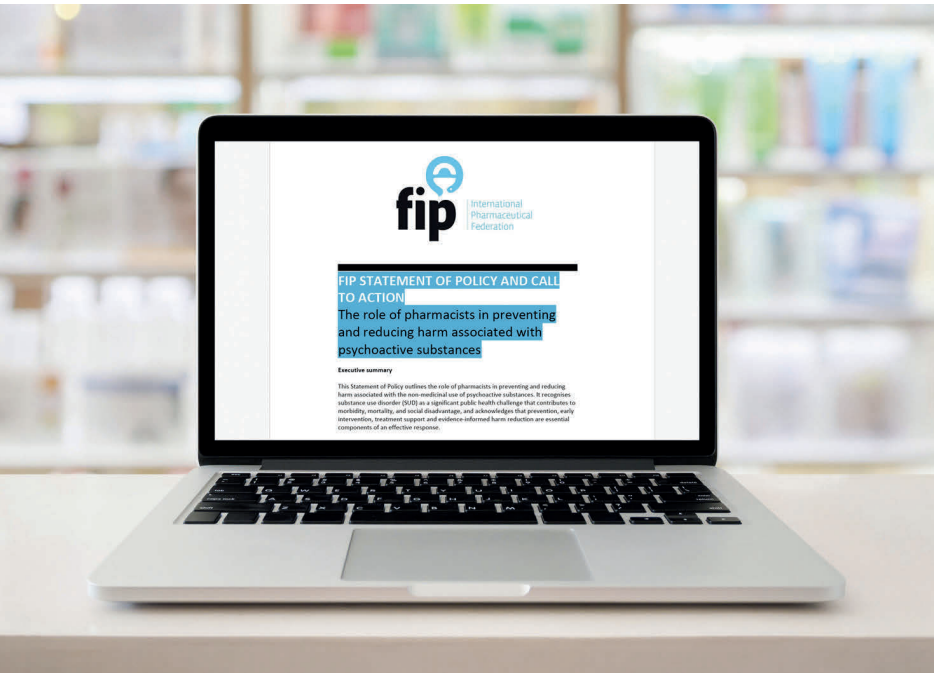
At the end of August, the International Pharmaceutical Federation (FIP) issued a new statement of policy and a call to action on pharmacy’s importance in preventing and reducing harm associated with psychoactive substances.
Given my longstanding interest in — some would say obsession with — this subject, I read the document with particular enthusiasm and concluded that it needs to be read widely, as it has profound implications for many stakeholders — not only those currently dispensing methadone and buprenorphine, but any pharmacist who dispenses psychoactive medication.
Other key stakeholders include the professional regulatory and representative bodies, all the schools of pharmacy, and, above all, Ministers and officials in the Department of Health who are involved in drawing-up the new National Drugs Strategy.
It is a matter of some urgency that the Department of Health is pushed to include the FIP recommendations in the 2026 National Drug Strategy, since you may recall that the first draft did not mention pharmacy at all, even though some of its recommendations directly affected pharmacy practice.
So, what is it about the FIP document that makes it so important? For a start, it recognises substance use disorders (SUD) as a significant public health challenge that contributes to morbidity, mortality, and social disadvantage.
Three key priorities for pharmacist intervention are set out, because they are society’s most accessible healthcare professionals. Firstly, to discourage the non-medical use of psychoactive substances obtained medically. Secondly, to prevent the development of SUDs — including those arising from inappropriate prescribing or use of medicines — and, thirdly, to support prevention, early identification, and management of SUDs.
The FIP document identifies roles for pharmacists in overdose prevention, treatment support via medication-assisted treatment, and public health awareness and promotion. It also recommends a more difficult role of advocacy for vulnerable populations — the homeless, prisoners, and refugees/migrants — who need to access adequate health services.
The acronym SUD has replaced more familiar terms such as ‘addiction’ and ‘dependence’ that are seen as stigmatising to individuals who have lost control over their drug use. It is ironic that, in the US, the Trump administration’s National Drug Strategy for 2026 is probably one of the first to acknowledge the importance of de-stigmatisation, given the US President’s capacity to stigmatise vast swathes of humanity on a regular basis.
Nevertheless, the strategy is explicit in pointing out that what is called ‘addiction’ is a chronic relapsing — but treatable — disease with a relapse rate (40-to-60 per cent) similar to that of hypertension and asthma (both 50-to-70 per cent). The strategy specifies “when someone with either of the latter relapses, they are usually treated with compassion and helped back to a path of wellness. Similarly, relapsing from addiction… warrants the very same level of compassion and care as other chronic relapsing diseases without shame or judgement”.
How difficult that might be for individual pharmacists was highlighted by two studies from the Strathclyde Institute of Pharmacy and Biomedical Sciences (SIPBS). The first, published in Addiction last year, looked at the experiences of student and early career pharmacists in Scotland. It noted that stigmatisation of people with SUD attending a pharmacy was a prominent observation, including negative stereotyping, adverse treatment because of judgements made about substance use, and structural stigma relating to barriers to accessing care.
There was also positive care provision by pharmacy staff who were empathetic, respectful, professional, and who formed long-term relationships with people with SUD. These positive examples provided valuable role models for professional formation, although some students reported that their university course poorly prepared them for the reality of supporting people with substance dependency.
The second paper, which appeared in Research in Social and Administrative Pharmacy earlier this year, was an international scoping review of opioid-related stigma interventions. It found that pharmacists’ understanding of opioids can be increased through educational and other strategies, which will help foster a compassionate and inclusive approach. In turn, this will support pharmacists in reducing stigma, supporting harm-reduction services, and improving patient outcomes.
The FIP document states: “Pharmacists can facilitate equitable access to harm reduction through mindful consideration of their own beliefs and attitudes towards the consumption of psychoactive substances by patients, therefore reducing the risk of stigma and reducing barriers to care.”
Of course, such sentiments are easily expressed if one has never been subjected to abuse, intimidation, threats, or physical violence by an out-of-control drug-taker. In such cases, compassion and empathy will, understandably, be in short supply.
But for those who can put such traumas behind them or who are lucky enough never to have experienced them, the FIP sets out in detail how pharmacists can have a positive influence. Key elements that resonated with me include a role in public health education, because I believe that nobody knows more about drugs and medicines than pharmacists.
The importance of brief interventions was emphasised and was one of the invaluable aspects of the addiction pharmacy module at the School of Pharmacy and Pharmaceutical Sciences, Trinity College Dublin, in a skills workshop led by Dr Marguerite Woods, who has a lifetime of experience working with SUD clients. Such skills are vital in facilitating early identification and referral to local drug services. This, of course, begs the question — do you know which services are in your area and how to contact them?
Other roles are already familiar to many pharmacists, such as treatment support, since over 80 per cent of those on opioid substitution therapy (OST) obtain their methadone or buprenorphine/naloxone from one of more than 800 pharmacies nationwide.
Overdose prevention via naloxone provision features strongly and the call to action envisages pharmacist-initiated provision — to which I would again add the need for advocacy around rapid access to oxygen in overdose cases to reduce the risk of toxic brain injury arising from hypoxia.
When it comes to education and training, FIP calls for competency-based programmes that address: The clinical pharmacology and toxicology of psychoactive substances; SUDs; identification of high-risk patterns and combinations; patient communication; stigma reduction; brief intervention skills; referral pathways; advocacy skills; psychosocial aspects; and how to manage challenging interactions.
Education like this need to be incorporated into certified training programmes and CPD systems. The policy challenges not only schools of pharmacy, but also government and the professional bodies to promote and implement a range of necessary changes.
Pharmacists themselves, even if they are not involved with OST provision, are invited to strengthen their role. I was particularly taken by the recommendation that we contribute to the development and use of measurable quality and outcome indicators for pharmacist services in this area to demonstrate impact (‘not more paperwork’, I hear you cry) — and, very importantly, support reimbursement (my emphasis added) alongside improving outcomes for all concerned.
Pharmacists themselves, even if they are not involved with OST provision, are invited to strengthen their role
The FIP statement contains an enormous amount of food for thought, deserves to be read in full and, above all, needs to be implemented.
Dr Des Corrigan, Best Contribution in Pharmacy Award (winner), GSK Medical Media Awards 2014, is an Adjunct Associate Professor at the School of Pharmacy and Pharmaceutical Sciences at TCD where he was previously Director and won the Lifetime Achievement Award at the 2009 Pharmacist Awards. He was chair of the Government’s National Advisory Committee on Drugs from 2000 to 2011, having previously chaired the Scientific and Risk Assessment Committees at the EU’s Drugs Agency in Lisbon. He chaired the Advisory Subcommittee on Herbal Medicines and was a member of the Advisory Committee on Human Medicines at the HPRA from 2007 to 2024. He has been a National Expert on Committee 13B (Phytochemistry) at the European Pharmacopoeia in Strasbourg and served on the editorial boards of a number of scientific journals on herbal medicine.