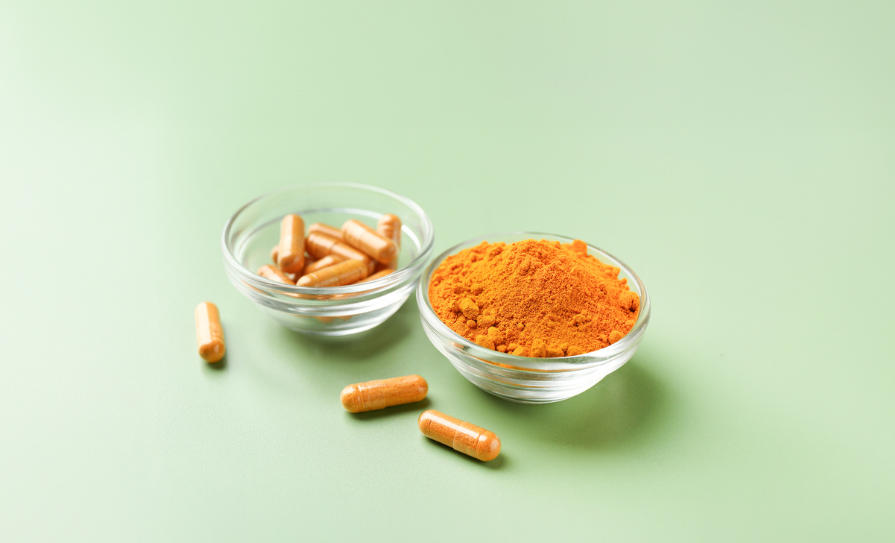
Does the evidence support the trendiness of curcumin and turmeric, wonders Dr Des Corrigan
I am usually cautious about trendy botanicals and their bioactive phytochemicals as I try to work out what is evidence-based and what is marketing hype. I am equally sceptical about those phytochemicals with a multitude of different clinical indications, having described some, in the past, as highly active molecules in search of a disease to treat. At first glance, trendy curcumin and the turmeric plant that synthesises it is a case in point. However, the evidence base goes a long way to negating any tendency
on my part to dismiss either turmeric or curcumin as an over-hyped supplement.
This is despite the fact that the EMA still permits only a traditional use indication claim for both species of Curcuma as being for the relief of digestive disturbances such as feelings of fullness, slow digestion and flatulence. I had thought that a revision of the EMA’s monograph on Curcuma by its Herbal Medicinal Products Committee (HMPC) would lead to a change in the therapeutic indication, notably in relation to anti- inflammatory action. I was foolishly optimistic, because the Minutes of the November 2025 meeting of the HMPC stated that “no EU herbal monograph revision is needed because no new data of relevance were detected that would change the content of the monograph”.
This, I simply do not believe, because this update was inspired by the publication last year in Phytotherapy Research of two systematic reviews and meta- analyses of RCTs of curcuminoids in two totally different medical conditions.
One looked at 14 RCTs of curcumin in postmenopausal women, reporting that it reduced both systolic and diastolic blood pressure and increased antioxidant capacity and superoxide dismutase levels. AST levels were decreased and vasomotor symptoms such as hot flashes, night sweats, sleep disturbances and mood swings improved after curcumin. As ever, the authors called for more research because of variations in purity and dosages, by which I presume they mean curcumin content and bioavailability, both of which are well-known confounding issues.
The second review involved a meta- analysis of 14 RCTs of the effects of curcuminoids on serum adipokines, mainly adiponectin and leptin, produced by fat cells and which help control appetite, fat storage and metabolism, among other functions. The review found a significant and substantial increase in serum adiponectin (a known suppressor of insulin resistance) levels after supplementation with either curcumin or turmeric, an effect it described as clinically large. There was no significant impact on leptin levels, although a similar 2024 systematic review and meta-analysis in the British Journal of Nutrition reported reductions in both adiponectin and leptin levels, particularly when high-bioavailability products were used. It found that the most effective dose of turmeric was 3g/ day; 1.5g/day for curcumin but just 1g/ day for highly bioavailable formulations.
The pharmaceutical technology methods used to enhance bioavailability of oral curcuminoids were reviewed in Pharmaceuticals in 2022. These included curcumin/ phospholipid complexes, nano- micellar curcumin and colloidal curcumin dispersions, but the most common approach was to incorporate either a Piper nigrum (Black Pepper) extract or pure piperine. The British Journal of Nutrition article pointed out that piperine itself had anti-insulin resistance, anti-inflammatory and anti-fatty liver effects, adding to the impact of curcumin in cardio-metabolic conditions. Much of this work on highly bioavailable curcumin derives from the use of curcumin as an adjuvant to conventional chemotherapy in breast and prostate cancer.
This is a highly active research area, going on the large number of preclinical studies. From a clinical perspective the results are not dramatic, even though a systematic review in BMC Cancer (2020) suggested that curcumin increases the effectiveness of chemotherapy and radiotherapy and improved survival time and also quality of life through a reduction in side-effects. A 2022 “perspective” on clinical trials finalised between 2010 and 2020 in the Journal of Cancer Research and Therapeutics used the word “potential”, stating that some phase I or II trials showed promise but others reported negative results.
The value of turmeric/curcumin in arthritic conditions, particularly osteoarthritis of the knee, makes the HMPC decision not to revise the turmeric monographs even stranger. Between 2021 and 2025, six reviews/ meta-analyses have been published in journals as diverse as Bioscience Reports, BMJ Open Sports Exercise Medicine, Frontiers in Immunology, Inflammopharmacology, Journal of Ethnopharmacology and Phytotherapy
All of this preclinical and clinical data makes me wonder how much evidence they need to revise the monograph
Research. All reported that either turmeric itself or curcumin, when compared to placebo, could decrease a visual analogue pain scale (VAS) and the standard Western Ontario and McMaster Universities Osteoarthritis Index (WOMAC). The 2021 Bioscience Reports paper noted that compared to NSAIDs, turmeric extract and curcumin had similar effects on joint pain, function and stiffness, but with lower adverse effects. It integrated pharmacological evidence along with the clinical data showing that curcumin inhibits a number of inflammatory factor-mediated pathways, including Nuclear Factor -kappa B, removes damaging free-radicals, and promotes cartilage matrix repair while inhibiting its degradation. According to the 2025 narrative review in Inflammopharmacology, curcumin also prevents chondrocyte apoptosis and the expression of inflammatory cytokines such as COX and prostaglandins.
All of this tells me that there is an abundance of ‘pharmacological plausibility’ to sustain a traditional use indication, even if the luminaries at the HMPC could not bring themselves to countenance a well-established use indication. All of this preclinical and clinical data makes me wonder how much evidence they need to revise the monograph. There is even a meta- analysis of 11 separate meta-analyses, for goodness sake. As reported in Phytotherapy Research in 2024, the pooled effect of all 11 showed that curcumin could significantly lower the VAS pain score and also the total WOMAC score along with its separate function, pain and stiffness scores. Two of the cited studies went to the trouble of estimating the minimum clinically important distance (MCID) that can establish whether an effect observed in a meta-analysis is clinically relevant.
One showed that the drops in VAS and WOMAC pain scores exceeded the MCID, while the second found clinical significance in the VAS and total WOMAC scores.
A network meta-analysis in the Journal of Ethnopharmacology concluded in 2024 that curcumin plus NSAIDs was best for reducing the total WOMAC score and the need for rescue medication, while a combination with chondroprotective agents such as glucosamine was best for pain. Both combinations were best for reducing the incidence of adverse events. It is also worth noting that many of the reviews emphasise the need to continue curcumin for a minimum of 12 weeks.
In trying to understand the HMPC decision, it is possible that their rules of procedure do not allow them to accept data for curcumin as being applicable to turmeric, and vice versa. It is also possible that some of the clinical data is mistrusted because many of the RC Ts were conducted in Iran, where curcumin is a well-established medicine. Also, the plant may fall short of the 30 year of traditional use within the EU. That said, I stick to my earlier comment that neither the plant or its curcumin is over-hyped.
Dr Des Corrigan, Best Contribution in Pharmacy Award (winner), GSK Medical Media Awards 2014, is an Adjunct Associate Professor at the School of Pharmacy and Pharmaceutical Sciences at TCD where he was previously Director and won the Lifetime Achievement Award at the 2009 Pharmacist Awards. He was chair of the Government’s National Advisory Committee on Drugs from 2000 to 2011, having previously chaired the Scientific and Risk Assessment Committees at the EU’s Drugs Agency in Lisbon. He chaired the Advisory Subcommittee on Herbal Medicines and was a member of the Advisory Committee on Human Medicines at the HPRA from 2007 to 2024. He has been a National Expert on Committee 13B (Phytochemistry) at the European Pharmacopoeia in Strasbourg and served on the editorial boards of a number of scientific journals on herbal medicine