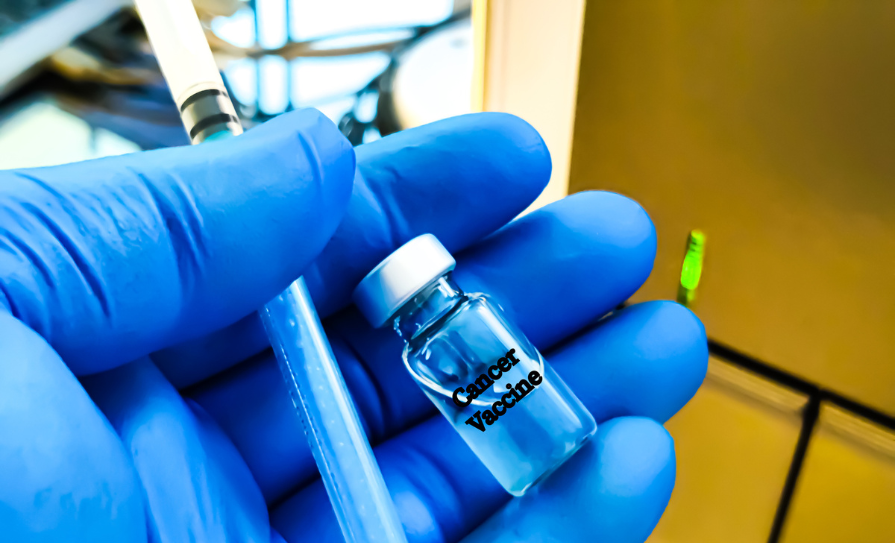
A new study from RCSI University of Medicine and Health Sciences demonstrates a novel approach in anticancer vaccine development. Results present the first preclinical evidence to show the efficacy of an mRNA vaccine in targeting neuroblastoma, the deadliest childhood cancer.
Researchers, led by Dr Olga Piskareva, Senior Lecturer, RCSI Department of Anatomy and Regenerative Medicine, tested an mRNA vaccine, using peptide carriers for its effect on neuroblastoma tumours. Results show that the vaccine, which helps the immune system recognise and fight neuroblastoma, delayed tumour development in preclinical models by 10- to-11 days and significantly reduced the tumour size by 70 per cent.
Despite advances in therapy, neuroblastoma remains a leading cause of childhood cancer deaths, accounting for 15 per cent of childhood deaths overall.
Between five and 10 cases are diagnosed in Ireland each year, with 80 per cent of patients showing no significant response to current treatments.
Dr Piskareva commented on the findings: “The mRNA vaccine technology is like LEGO bricks. By combining different bricks, we can tailor the vaccine to the individual’s needs with high precision. This pilot study indicates promising potential in the development of anti-cancer vaccines for neuroblastoma, offering new hope for children and
families suffering from the disease. We
are at the beginning of the mRNA vaccine development road, but the first milestone has been successfully completed.”
Researchers applied a new approach to develop this vaccine, based on tiny self-assembling particles called peptide nanoparticles. These nanoparticles are designed to target Glypican 2 (GPC2), a protein found on the surface of neuroblastoma cells. Because GPC2 also appears in several other cancers, this approach has the potential to be adapted to treat a wider range of tumours, marking an important step forward for future cancer immunotherapies.
Neuroblastoma that comes back after initial treatment is particularly difficult to cure, as the cancer often becomes resistant to existing therapies. Further research into novel treatment strategies, such as those demonstrated in this study, could help address this challenge and offer better prognoses for those affected by neuroblastoma going forward.
The study was carried out in collaboration with the School of Pharmacy at Queen’s University of Belfast and was funded by the Irish Research Council (IRC), Higher Education Authority (HEA), The Health Research Board (HRB), as
well as The Conor Foley Neuroblastoma Cancer Research Foundation. The paper is published in Molecular Therapy Oncology.