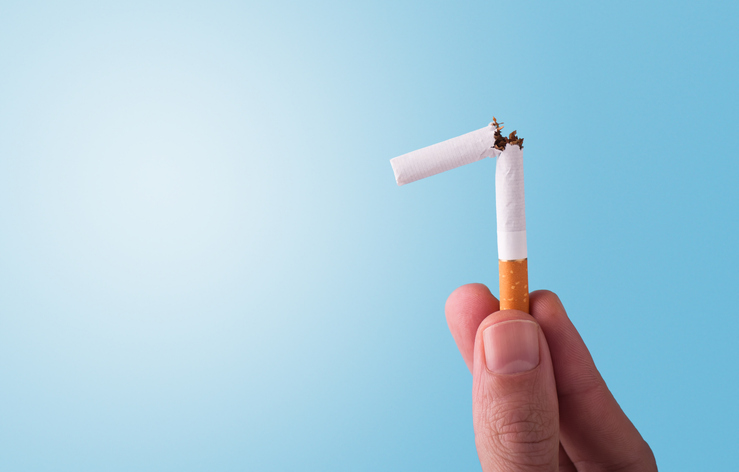
Quitting smoking not only improves physical health, but can have mental health benefits too
Stopping smoking is one of the most beneficial things a person can do for their health, and the health service is making considerable efforts to help people kick the habit. In fact, the Irish Heart Foundation says stopping smoking is the single most important step a person can take to live longer and greatly reduce the risk of heart disease and stroke.
According to the Healthy Ireland Survey 2024, 17 per cent of the population are current smokers, with 14 per cent daily smokers and 4 per cent occasional smokers. While this is down from 23 per cent in 2015, it represents a considerable section of the population.
Smoking rates remain highest among the 25-to-34 age group at 20 per cent, however, these have declined from the 32 per cent reported in the first Healthy Ireland Survey in 2015. Men, at 20 per cent, remained more likely to smoke than women, at 15 per cent.
In terms of e-cigarette use, 8 per cent of the population currently use them either daily (5 per cent) or occasionally (3 per cent), with a further 13 per cent reporting they have tried them in the past but no longer use them. These figures have not changed since 2023.
These statistics are very troubling because, as the HSE warns, one-in-two smokers will die from a tobacco-related disease. Every week, over 100 people die and more than 1,000 people are hospitalised in Ireland from smoking-related illness. Furthermore, 83 per cent of smokers regretted ever starting smoking.
Smoking takes 10-to-15 quality years off a person’s life. It causes a staggering range of illnesses and conditions, cancer, heart attacks, stroke, lung disease, blindness, diabetes and many other diseases. It also reduces fertility for both women and men, while smoking during pregnancy can lead to ectopic pregnancy, miscarriage and stillbirth.
Mental health
Mental health is also negatively affected by smoking. Contrary to a common misunderstanding, the HSE said that smoking does not help relieve stress, anxiety or improve mood.
“Smoking does the opposite. The nicotine in cigarettes can cause symptoms similar to anxiety,” it said. As well as impacting a person’s mood, it can affect sleep quality and a person’s self-image.
“Most smokers say they want to stop. But some continue because smoking seems to relieve stress and anxiety,” the HSE said. The nicotine in cigarettes is very addictive. Smoking may feel relaxing because it relieves symptoms of nicotine withdrawal.
“When smokers have not had a cigarette for a while, the craving for nicotine makes them feel irritable and anxious. These feelings can be temporarily relieved by smoking. Smokers then connect the improved mood and stress release with smoking.
“This common misunderstanding can be a barrier to people trying to quit. Quitting has been clearly shown to improve mental health.
“Nicotine levels rise and fall in your body throughout the day. For example, nicotine levels drop overnight while you are sleeping. This is why cravings for a cigarette in the morning are strong,” the HSE said.
Stopping smoking can help reduce the symptoms of anxiety disorder and depression by as much as treatment with antidepressants. People with mental health issues such as depression are more likely to smoke than other people, the HSE said. They also tend to smoke more.
“It is part of the reason why people who experience mental health problems die on average 10 to 20 years earlier than others,” the HSE said. “Smoking has negative effects on mood. But it also interferes with the way some antipsychotic medicines and antidepressants work — smokers may need higher doses.”
After quitting, smokers with mental health issues are likely to feel much calmer and more positive, and may need a lower dosage of some medicines.
Families
These are just some of the many benefits a person can experience from smoking cessation. Their families also will benefit, being protected from the risks associated with second-hand smoke. This smoke contains over 4,000 chemicals, including arsenic and cyanide, and benzene — a chemical that can cause leukaemia.
“When you stop smoking, you protect your family’s health as well as your own,” the HSE said. “When you smoke, it’s not just your health that is at risk. A smoker only inhales about 15 per cent of the smoke from a cigarette — the other 85 per cent goes into the air around you or is inhaled by others.”
Non-smoking women who live with someone who smokes are 27 per cent more likely to get lung cancer than non-smoking women who live with a non-smoker.
Measures such as opening a window when you smoke does not make a difference, the HSE continued, as more than 80 per cent of smoke is invisible, “you cannot see where it goes or control it”.
Very worryingly, children are more at risk from second-hand smoke. This is because they breathe more rapidly, and their lungs, airways and immune system are still developing.
Second-hand smoke can increase a child’s risk of illnesses, including ear infections, asthma, allergies, meningitis, cancer, bronchitis, and pneumonia
Babies exposed to second-hand smoke are also at increased risk of sudden infant death syndrome. Furthermore, children who grow up seeing their parents smoke are also three times more likely to smoke when they grow up.
But it is never too late to quit, and the health benefits start right away. In as little as 20 minutes, a person’s circulation improves, blood pressure and heart rate lower, reducing the risk of a heart attack.
After two days, the nicotine and carbon monoxide leave the body, and the sense of smell and taste starts to improve. After one year, a former smoker’s chance of having a heart attack drops by half and after five years, the risk of smoking-related cancers is greatly reduced.
After 10 years, the risk of lung cancer is reduced by half, and after 15 years, the risk of having a heart attack is the same level as a non-smoker.
“If you smoke 20 cigarettes a day, a mugful of tar builds up in your lungs over a year. The toxic chemicals in this tar cause cancer. When you give up smoking, your lungs quickly begin to heal and get better at removing tar.”
For the many people who wish to stop smoking, the HSE has dedicated resources to help, such as a freephone number, 1800 201 203, a quit smoking kit, and the www.quit.ie website. The community pharmacist is also a vital part of the smoking cessation team.
As well as providing clinically proven advice and help, the community pharmacist is also a source of trusted, over-the-counter nicotine replacement therapy (NRT) products. These are licensed medicines that give a low level of nicotine. They do not contain the other poisonous chemicals present in tobacco smoke.
Therapies
One of the best known products are from the Nicorette range.
One of the most popular of its products is nicotine gum. Nicotine gum is a fast-acting form of NRT. It can be used in combination with nicotine patches. It gives a dose of nicotine as it is chewed, and gives the mouth something to do instead of smoking.
Coming in a variety of flavours, it provides craving relief that can last for up to three hours.
“Over time, you should need to use fewer and fewer gums to control your nicotine cravings and withdrawal symptoms,” the product’s makers said. “We recommend gradually reducing the number of pieces of gum that you chew each day.”
Nicorette InvisiPatch is a once-a-day way to control nicotine cravings. It is applied first thing each morning to clean, dry, hairless skin on the arm, chest, or hip. Before going to sleep, it is removed and disposed of safely.
Coming in packets of 10mg, 15mg or 25mgs, it allows for controlled amounts of nicotine to be absorbed through the skin into the bloodstream, controlling nicotine cravings for up to 16 hours.
There are also Nicorette Lozenges, a discreet and great tasting way to quit smoking. The lozenge should be allowed to slowly dissolve, and should not be chewed or swallowed.
Nicorette QuickMist mouth spray gets to work on cravings in 30 seconds. It is suitable for light and heavy smokers. The Nicorette Inhaler is also available.
Another trusted brand is NiQuitin, which has a range of products. NiQuitin Clear Patch provides 24 hours of controlled nicotine release and helps a person stay in control of their cravings.
“Niquitin Clear Patches come in three strengths which deliver different levels of nicotine release over a 24-hour period,” Niquitin said. “This means that you can gradually decrease the amount of nicotine in your system, helping you to beat those pesky cravings.
“The length of time your step-down programme should depend on how many cigarettes you currently smoke. If you currently smoke 10 or more cigarettes a day, we recommend our 10 week programme, starting with a 21mg nicotine patch. If you smoke less than 10 cigarettes a day, we recommend our eight-week programme, which starts with our 14mg nicotine patch.”
There are also NiQuitin Minis Lozenges. In a handy pocket-sized container, they start to relieve cravings in just three minutes. They dissolve in the mouth in approximately 10 minutes and are effective, on-the-go craving relief.
Nicotinell also has a range of trusted products. One of these is Nicotinell Nicotine Lozenges. They dissolve in the mouth to release a dose of nicotine to help satisfy the urge to smoke. Convenient, discreet, and an alternative option to Nicotinell’s chewing gum, they can be used in almost any type of situation. Nicotinell Lozenges are available in two strengths with a fresh, minty taste.
There is Nicotinell Nicotine Gum for on-the-go relief when the urge to smoke strikes.
“Chewing our Nicotinell Gum releases nicotine to help manage that peak urge,” its makers said. “Nicotinell chewing gum is available in different strengths and flavours, helping you to vary tastes and find what works best for you.”
Nicotinell Nicotine Patch provide around-the-clock relief from cravings. It gives a consistent supply of nicotine for 24 hours.
“With that in mind, a patch can help curb those intense morning cravings and help you stop smoking. Nicotinell Patches are available in three strengths. The dose you start with depends on how much you smoke per day.”
There are also Galpharm Nicotine Lozenges available from pharmacies.
As well as over-the-counter products, there are a number of lifestyle changes a person can make to improve their chances of quitting. As advised by the Irish Heart Foundation, these include reducing caffeine and alcohol, staying positive, and getting regular exercise. People should also avoid substituting sweets, cakes, and biscuits for cigarettes.