Is AI a little more stupid than we first thought, wonders Fintan Moore
There used to be a quip years ago that there were three forms of intelligence — human, animal and military,
in that order — which was probably a tad unfair to the people in MI5 and their equivalents across the world. And now we have a fourth form of intelligence, which is Artificial.
The term AI (Artificial Intelligence) is probably overused, with lots of innovations being ascribed to AI when all that is being done is actually using a computer to sort numbers into spreadsheets, assign names to receive emails, or do other similar data organisation tasks.
There is, of course, a lot of understandable fear about AI because of its ability to generate art, music, and writing — and the impact of that on people who depend on creative work for a living — but it’s still an open question as to just how intelligent it actually is.
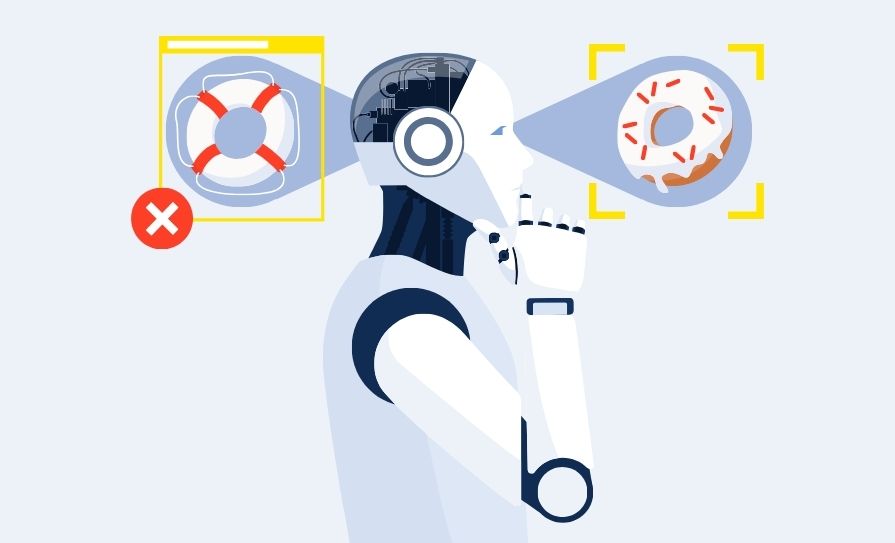
Whatever about the undoubted effectiveness of AI in some areas, it nevertheless has the potential to give very confident but totally inaccurate answers to very basic questions.
For instance, I recently had a query emailed to me from a patient of mine who suffers with diabetes, wondering if she could get Mounjaro on the Long Term Illness (LTI) scheme. The reason for her email was that she had looked online and received the following information:
AI Overview
Whether Mounjaro (tirzepatide) is covered by your Medical Card depends entirely on what you are taking it for.
For Type 2 Diabetes: Yes, Mounjaro is an approved treatment for Type
2 diabetes and is covered by the Medical Card and the Drugs Payment Scheme (DPS) when prescribed by your doctor.”
So, this crock of absolute horse crap was presented to my patient
as fact, but at least she was aware enough of the failings of AI to check its veracity. There are lots of patients out there who would accept it as gospel and wave their phones in their pharmacist’s face, demanding to know why they hadn’t been informed of their entitlement to Mounjaro.
It’s worrying to think how much more wrong — and even damaging — misinformation is out there. And as regards the erroneous reply above, I’m perpetuating the cycle by repeating it in print because
AI will spot the words as it trawls the Internet for answers and will probably assign it more value because it’s in the reputable and distinguished Irish Pharmacist. Maybe animals will ultimately prove to be smartest because they think without computers.
Adaptation
It’s hard to believe that it’s now over six years since Covid-19 happened and changed so much of our day-to-
day life. A lot of things have reverted to how they were before, but there’s still a heightened awareness of the potential for disease to spread. In
our pharmacy, we still have the Perspex screens up at the counter due to the coughing and sputtering of so many patients.
When we see the griminess that accumulates on the plastic, we feel completely justified in the decision to keep the barriers up. Six years on, we also still have our Novaerus air purifier running 24 hours a day — I’ve no idea if it’s doing much, but it can’t be doing any harm.
The biggest residual change is, of course, Healthmail. It’s not a proper e-prescribing system but to be fair, it’s not bad. What has helped a lot over the years is that patients have gradually adapted and understand better how it works. They have learned through trial and error that just because the doctor has said a prescription has been sent doesn’t necessarily mean that it actually was sent, so they allow a bit of waiting time for reality to match the doctor.
They have also grasped that when a prescription arrives with us we don’t automatically process it, and instead we wait for the patient to order it. The conversation at the counter used to constantly go:
f“Can I pick up the prescription for Mary Bloggs?”
f“Was it ordered already?”
f“Yes. This morning.”
f“Was it ordered off us or off the doctor?”
f“…. off the doctor.”
f“Alright – we’ll see if it arrived, and how long it’s going to take to get ready. We might need you to call back.”
After six years people are getting better at volunteering the relevant information and factoring in the calling back bit, so they’re now more likely to phone ahead to order rather than rock up in person. It took a while, but we’re getting there.
So, this crock of absolute horse crap was presented to my patient as fact, but at least she was aware enough of the failings of AI to check its veracity
Sunshine of my life
One legacy of the Trump presidency will be the global realisation sparked by the US-Iran war that oil- dependency is not a healthy economic reality. The hope is that people will do what they can to shift to renewable energy sources.
One of the obvious options is to install solar panels, which I did on the roof of my pharmacy in 2021. Obviously, it’s not going to be an option for everybody but in my case, the pharmacy has a flat concrete slab roof with good sun exposure for most of the day until evening time, when there’s a bit of tree shade. In terms of cost, the estimated time for the panels to pay for themselves was seven years, which looks like being about right, although there have been periods of high energy prices when the panels were consequently saving me more on costs. If you have a premises that will facilitate solar, then I would highly recommend looking into it.