Which of nature’s creatures would be best suited for a career in pharmacy, ponders Fintan Moore
It’s always a fun discussion to ask a mixed group of people what animal they would choose to be if they had to pick one. Children tend to like the idea of cheetahs, because they run really fast, or giraffes, because they can look over trees. There was a time
in life when I’d have picked a leopard because they just get to kill something, drag it up a tree, then relax and eat it.
As I grew older and more mellow, the rhinoceros became appealing — it quietly minds its own business, munches grass, and gets left alone by all sensible predators. After years in community pharmacy, I am yet again changing my vote — and my new choice is the octopus.
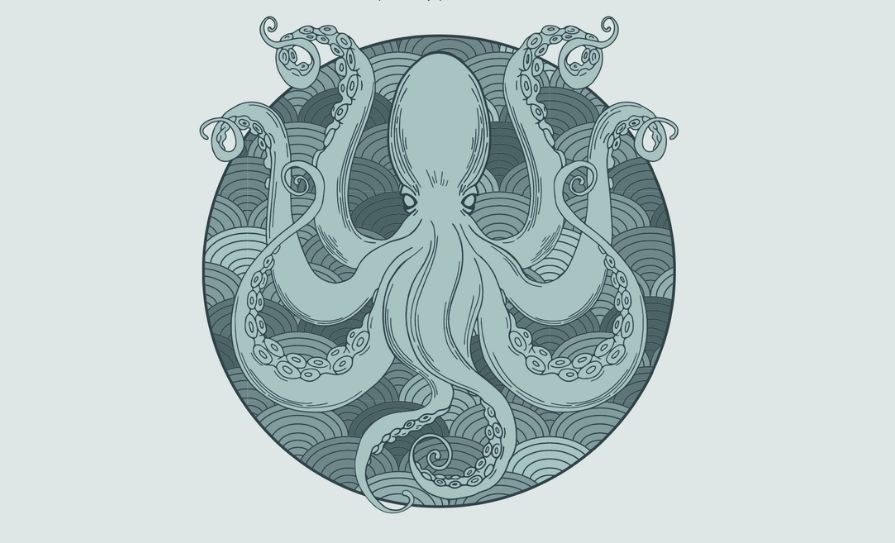
The more I read about octopuses (grammatically more correct than octopi, or so I’m told), the more I realise they are almost perfectly adapted to dispensary life, apart from the lack of water issue obviously. Not only are they highly intelligent, but in addition to a central brain, each one of their eight arms also has its own separate brain.
In a pharmacy, this would allow for simultaneously keying in a prescription while counting tablets, working through a CCS checklist with a patient, answering the phone, ringing through a sale on the till, making up an antibiotic suspension, filling in a CD register, and holding a mug of tea. I accept that the inability of each arm to speak might be a limiting factor, but there’s probably a tech-based workaround to be found.
Of course, nowadays eight arms isn’t enough, given that while the octopus is doing all of the above, there could also be a request for Solpadeine or Motilium or two packs of products containing paracetamol, or a new inhaler to be demonstrated, or a Healthmail query to be sent, or an order to transmit, or a High-Tech stock delay to sort out.
Two octopuses should be just about able to manage, and if not, they can just change colour to blend with the background and pretend that they’re not even there. I wish I had that option some days.
Staying deep
The world is full of weird and wonderful human activities, but one of the strangest sports is probably that of free diving. There are a few variants on a theme but, fundamentally, it’s a contest to find out which competitor can hold their breath underwater the longest.
A typical human can hold their breath for about 30-to-60 seconds, but the world record was set by a Croatian who stayed at the bottom of a three-metre pool for 29 minutes. Popular contests within the world of free diving involve people descending along a fixed rope to see who can get to the deepest point before (hopefully) returning safely to the surface. The record for this is a pretty remarkable 127 metres.
Not only are they highly intelligent, but in addition to a central brain, each one of their eight arms also has its own separate brain
Given that these are competitive events, and humans are often very competitive animals, there are problems with contestants cheating to gain an edge. Some events require strength to aid oxygen-efficient movement so, similarly to many other sports, steroid use has been known to occur to improve the relevant muscles.
A more niche drug scandal involves the use of benzodiazepines, for largely the same reasons that they get used on dry land, namely to lower stress and induce feelings of calm. In free diving, when divers are relaxed, they move slowly and use oxygen at a slower rate. This improves their chances of winning, but obviously the reduced alertness at 100 metres below the surface can also enhance their chances of dying. It seems not worth the risk to me, but whatever floats their boat… or maybe sinks it
Rise of the machine
We’re hearing a lot these days about the capability of AI to take over tasks that are currently the preserve of humans. Lower- level computer programmers, legal workers, and accountancy staff are in the firing line, but these could be the tip of the iceberg. When autonomous machines become more widespread, jobs like truck-driving, construction work, warehouse stocking, and farming will also need fewer people.
It’s not hard to imagine that eventually roles in the world of medicine and pharmacy could also be under threat. There’s a thin end of the wedge appearing already.
The option now exists to have a pharmacy’s phone answered by an automated service that will take details from the caller, such as name and address and details of what prescription items they want to order. The system can then feed this information to staff to process, and the prescription can be made ready for collection.
The benefits of this are obvious in terms of staff time saved by not having to handle telephone calls, especially on busy days where everyone is under pressure. However, and maybe I have an inner Luddite streak, I think the personal connection between patients and pharmacists and other members of the team is more important than the time saved in fielding phone calls. We’re not selling pizzas or burgers, and we need to be approachable and sympathetic in dealing with people.
That relationship is helped by building a rapport with them at every opportunity — including on the phone — even on the days that I wish the damn thing would stop ringing.
Fintan Moore graduated as a pharmacist in 1990 from TCD and currently runs a pharmacy in Clondalkin. His email address is: greenparkpharmacy @gmail.com.